Operative hysteroscopy: treating the inside of the uterus without an incision
By Dr Olivier Kadoch, obstetrician-gynaecologist · Updated 25/10/2026
In brief
Operative hysteroscopy involves passing a thin camera through the vagina and cervix to see and treat the inside of the uterus. It can remove polyps or submucosal fibroids (myomas) and divide a septum or adhesions (synechiae), with no scar and, in most cases, as day surgery. As a guide, time off work ranges from a few days to 10 days depending on the procedure and your job.
Indications for operative hysteroscopy
| Indication | Clinical situation |
|---|---|
| Endometrial polyp | Abnormal bleeding, infertility, polyp after the menopause |
| Submucosal fibroid (myoma), FIGO types 0 to 2 | Heavy periods, infertility |
| Uterine septum | Recurrent miscarriage or infertility, depending on test results |
| Synechiae (adhesions) | Lighter or absent periods after a procedure inside the uterus, infertility |
| Retained tissue after pregnancy | Persistent bleeding after a miscarriage or birth |
| Targeted biopsy | Bleeding after the menopause, abnormal appearance of the endometrium |
What to expect
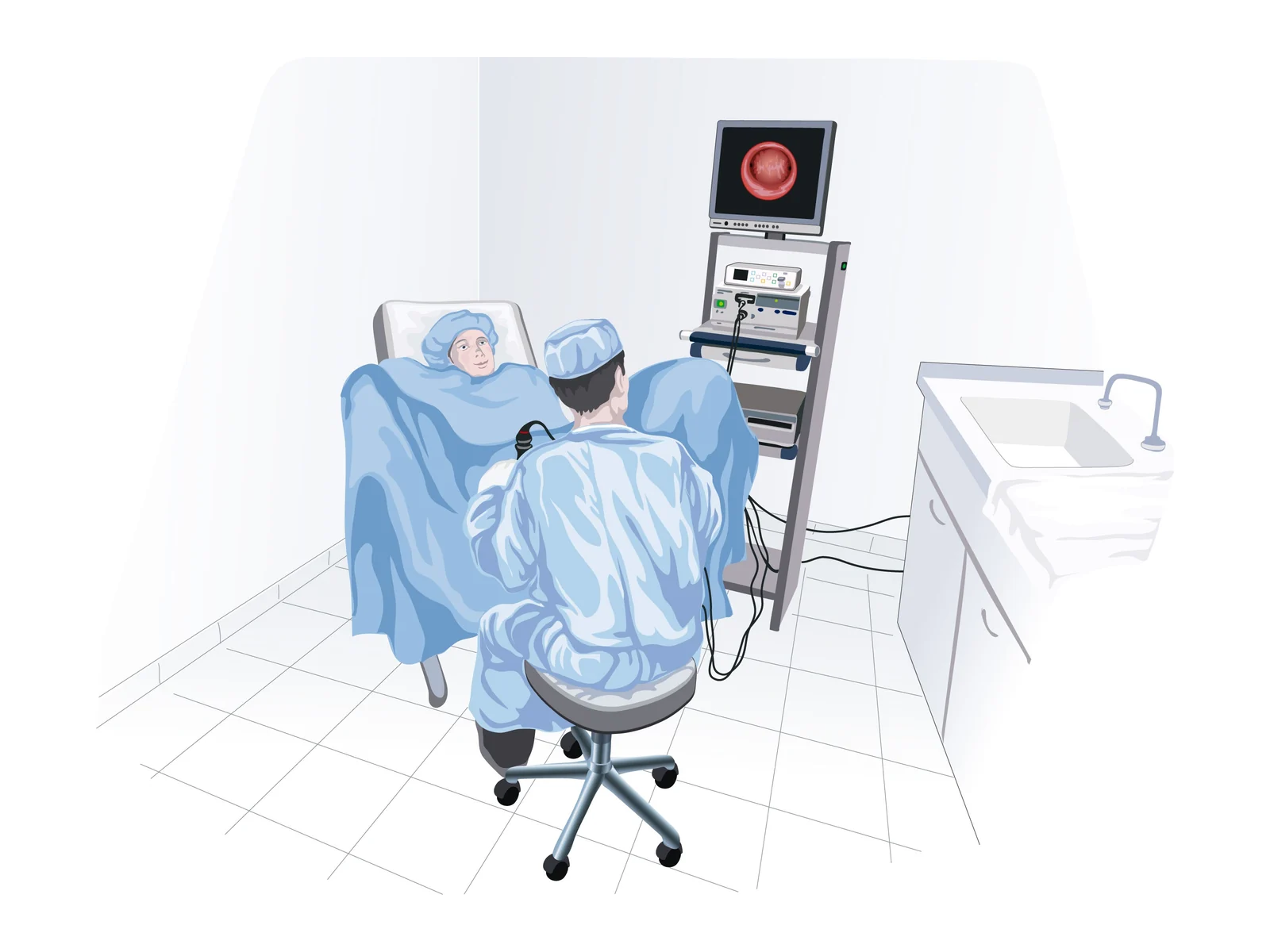
- 1Before. Consultation, ultrasound, sometimes a diagnostic hysteroscopy in the consulting room, and an anaesthetic consultation.
- 2On the day. At the clinic, under general or regional anaesthesia, as day surgery in the vast majority of cases.
- 3Afterwards. Light bleeding and period-like cramps for a few days; you can return to your usual activities quickly.
- 4Follow-up. A consultation to go over the results of the tissue analysis; a follow-up hysteroscopy for some indications.
Frequently asked questions
Is operative hysteroscopy painful?
The procedure is performed under anaesthesia. Period-like cramps may occur for one to two days and are relieved by simple painkillers.
Can I get pregnant after a hysteroscopy?
Yes, that is often the aim of the procedure. How long to wait before trying for a pregnancy depends on the procedure performed; it is discussed at the post-operative appointment.
What are the risks?
Rare: perforation of the womb, infection, bleeding, excessive absorption into the bloodstream of the fluid used to open up the cavity. The amount of fluid is measured continuously during the procedure; if a perforation occurs, the operation is stopped and a laparoscopy may be needed to check the bowel.
Do I need to stay in hospital?
Usually not: the procedure is done as day surgery and you go home the same day. You are given a quote before the procedure.
How long will I need off work after operative hysteroscopy?
As a guide, generally 7 days (desk work) to 10 days (physical work) after removal of a polyp, and 2 to 4 days after removal of a fibroid by hysteroscopy. The length is tailored to your situation at the consultation.
When can I return to sport, baths and sex?
Generally, sport can be resumed straight away, except swimming. Sex, baths and tampons should be avoided for about 15 days.
References
- Deffieux X, et al. Hysteroscopy: guidelines for clinical practice from the French College of Gynaecologists and Obstetricians. Eur J Obstet Gynecol Reprod Biol, 2014. doi:10.1016/j.ejogrb.2014.04.026 — PMID 24835861
- Brun JL, et al. [Management of women with abnormal uterine bleeding: Clinical practice guidelines of the French National College of Gynecologists and Obstetricians (CNGOF)]. Gynecol Obstet Fertil Senol, 2022. doi:10.1016/j.gofs.2022.02.078 — PMID 35248756
- Munro MG, et al. The two FIGO systems for normal and abnormal uterine bleeding symptoms and classification of causes of abnormal uterine bleeding in the reproductive years: 2018 revisions. Int J Gynaecol Obstet, 2018. doi:10.1002/ijgo.12666 — PMID 30198563