Endometrial polyp: symptoms, risk and removal
In brief
A uterine polyp (endometrial polyp) is a small growth of the lining of the inside of the uterus; it is almost always benign and shows up mainly as bleeding between periods or after the menopause. In a meta-analysis of more than 35,000 women who underwent surgery, a precancerous or cancerous lesion was found in 1.1% of polyps before the menopause and in 4.9% after the menopause, this risk being higher in women with bleeding. The usual treatment is removal by hysteroscopy (a camera passed through the vagina and cervix), with examination of the polyp under the microscope.
What is an endometrial polyp?
The endometrium is the lining that covers the uterine cavity and is renewed with each cycle. A polyp is a localised overgrowth of this lining, attached to the wall by a broad base ("sessile" polyp) or by a thin stalk ("pedunculated" polyp). Its size varies from a few millimetres to several centimetres. There may be one or several.
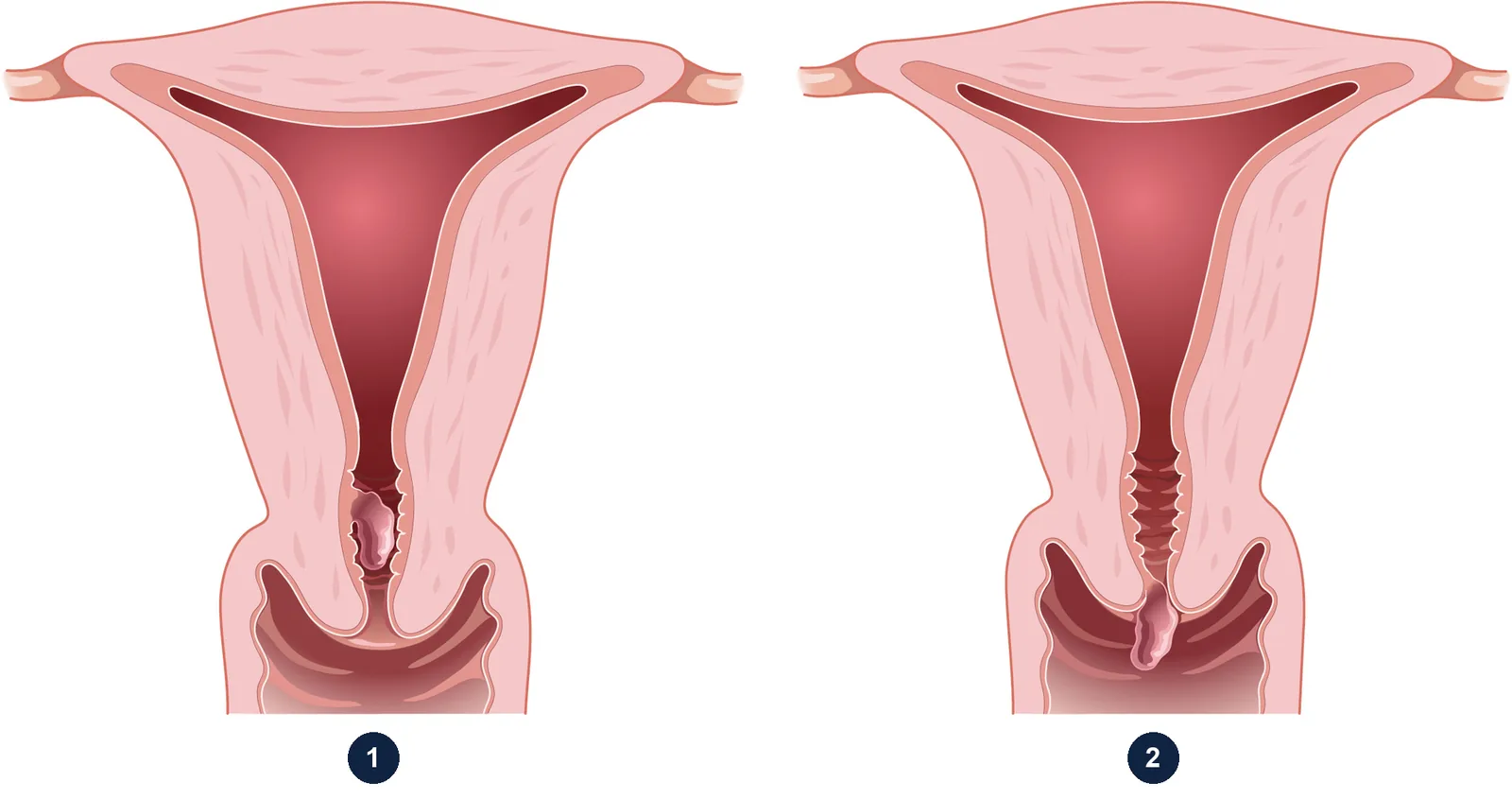
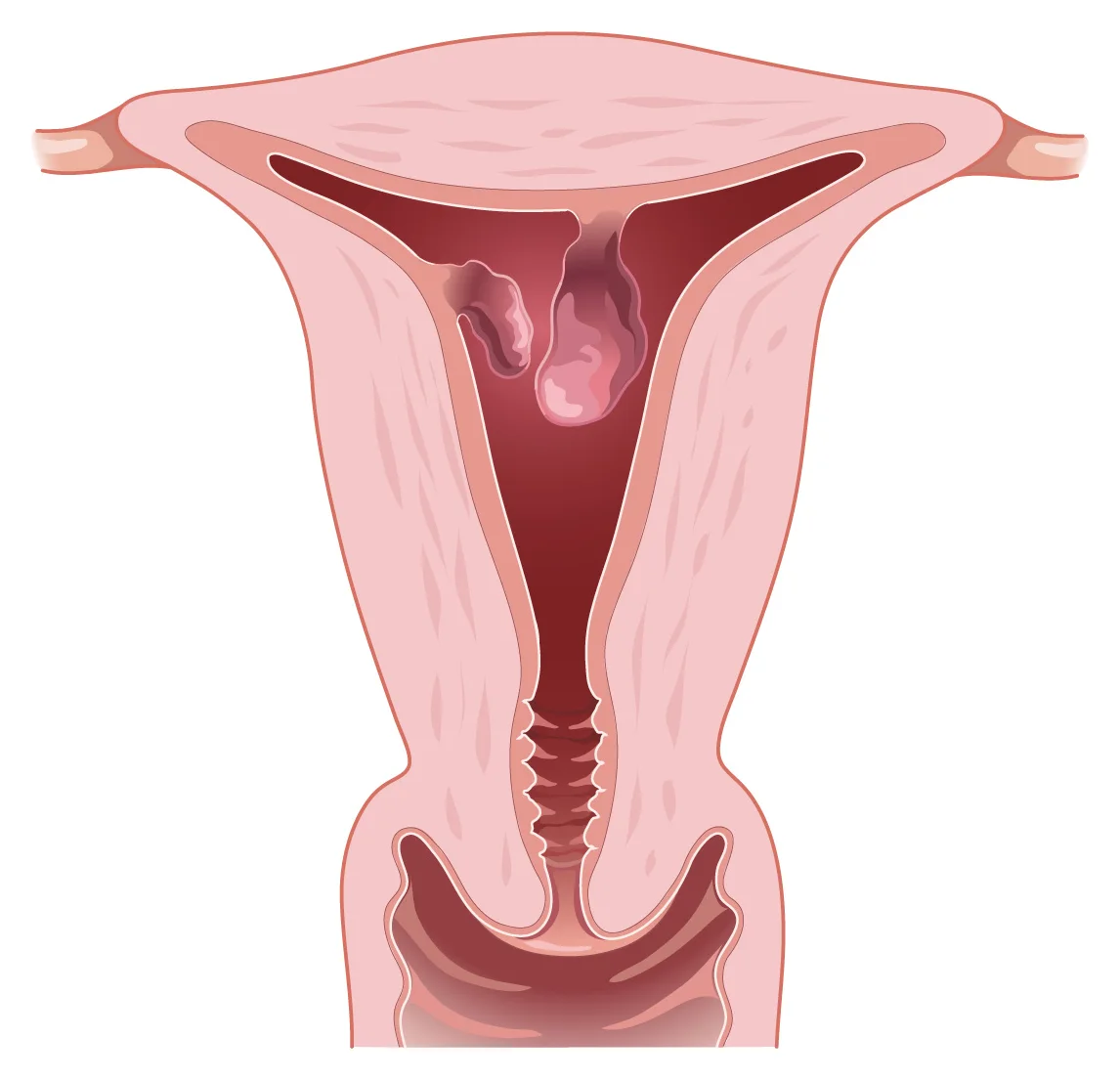
An endometrial polyp is different from:
- a cervical polyp, located in the cervical canal and often visible during speculum examination;
- a submucosal fibroid, a benign tumour of the uterine muscle that protrudes into the cavity.
How polyps form is not fully understood. Polyps are sensitive to oestrogens, which explains the most frequently cited contributing factors: age around the menopause, being overweight, treatment with tamoxifen (after breast cancer), poorly balanced hormone therapy.
What symptoms suggest a polyp?
Many polyps cause no symptoms and are discovered during an ultrasound performed for another reason. When they do cause symptoms, it is mainly abnormal bleeding:
- bleeding or spotting between periods;
- periods that are longer or heavier than usual;
- bleeding after intercourse;
- bleeding after the menopause, which should always lead to a consultation.
A polyp does not generally cause pain. Significant pelvic pain should prompt a search for another cause.
In a woman who wishes to become pregnant, a polyp may also be discovered during fertility investigations or before insemination or IVF.
How is the diagnosis made?
Diagnosis is based on imaging and then, if necessary, on direct examination of the cavity.
| Test | What it provides | Limitations |
|---|---|---|
| Transvaginal pelvic ultrasound | First test; may show a localised thickening of the endometrium | May miss a small polyp or confuse it with general thickening |
| Saline infusion sonography (ultrasound with saline injected into the uterus) | Clearly outlines the polyp in the distended cavity | Does not allow a sample to be taken |
| Diagnostic hysteroscopy | Direct view of the cavity, location and number of polyps | More invasive procedure, performed in the consulting room or in theatre |
| Histological (pathology) examination | The only test that confirms whether it is benign or not | Requires the polyp to be removed or a fragment to be sampled |
Ultrasound is preferably performed in the first part of the cycle, when the endometrium is thin. According to the guidelines of the CNGOF (French College of Gynaecologists and Obstetricians), diagnostic hysteroscopy is ideally performed by vaginoscopy, with a small-calibre hysteroscope, without general anaesthesia or routine antibiotics.
Can a polyp be cancerous?
In the vast majority of cases, no. The risk is not zero, however, and depends mainly on two factors: menopausal status and the presence of bleeding.
A meta-analysis of 51 studies (35,345 women who underwent hysteroscopic removal of a polyp) found:
| Situation | Proportion of precancerous or cancerous polyps |
|---|---|
| All women | 2.7% |
| Before the menopause | 1.1% |
| After the menopause | 4.9% |
| Women without bleeding | 1.9% |
| Women with bleeding | 5.1% |
These figures explain the usual approach: after the menopause, and all the more so in the presence of bleeding, removal of the polyp and its examination are offered. In a young woman without symptoms and with a small polyp, simple monitoring may be discussed. The authors of this meta-analysis emphasise that these data make it possible to avoid overtreatment in low-risk women.
Treatment with tamoxifen increases the frequency of polyps and endometrial abnormalities; any bleeding during this treatment should be reported.
Should a uterine polyp be removed?
Not always. The decision takes into account age, symptoms, the size of the polyp and plans for pregnancy.
Removal is generally offered:
- after the menopause;
- in the event of abnormal bleeding;
- in the event of a large polyp or multiple polyps;
- in a woman planning a pregnancy, particularly before insemination or IVF;
- in the presence of risk factors for endometrial cancer (significant excess weight, tamoxifen, Lynch syndrome).
Monitoring may be discussed:
- in a premenopausal woman without symptoms and with a small polyp.
There is no drug treatment that reliably makes a polyp disappear.
Polyps and fertility: what is the link?
A polyp might hinder implantation of the embryo, but data remain limited. A Cochrane review analysed randomised trials evaluating operative hysteroscopy in infertile women: in one trial conducted before intrauterine insemination (204 women), removal of polyps was associated with a clinical pregnancy rate of about 63%, compared with 28% after diagnostic hysteroscopy alone. The authors judge this level of evidence to be low and state that no data on live births were available.
In practice, when a polyp is discovered in a woman trying to become pregnant, its removal is most often offered, as the procedure is short and its complications are rare. Fertility investigations are covered in the article infertility in couples.
How is a polyp removed (polypectomy)?
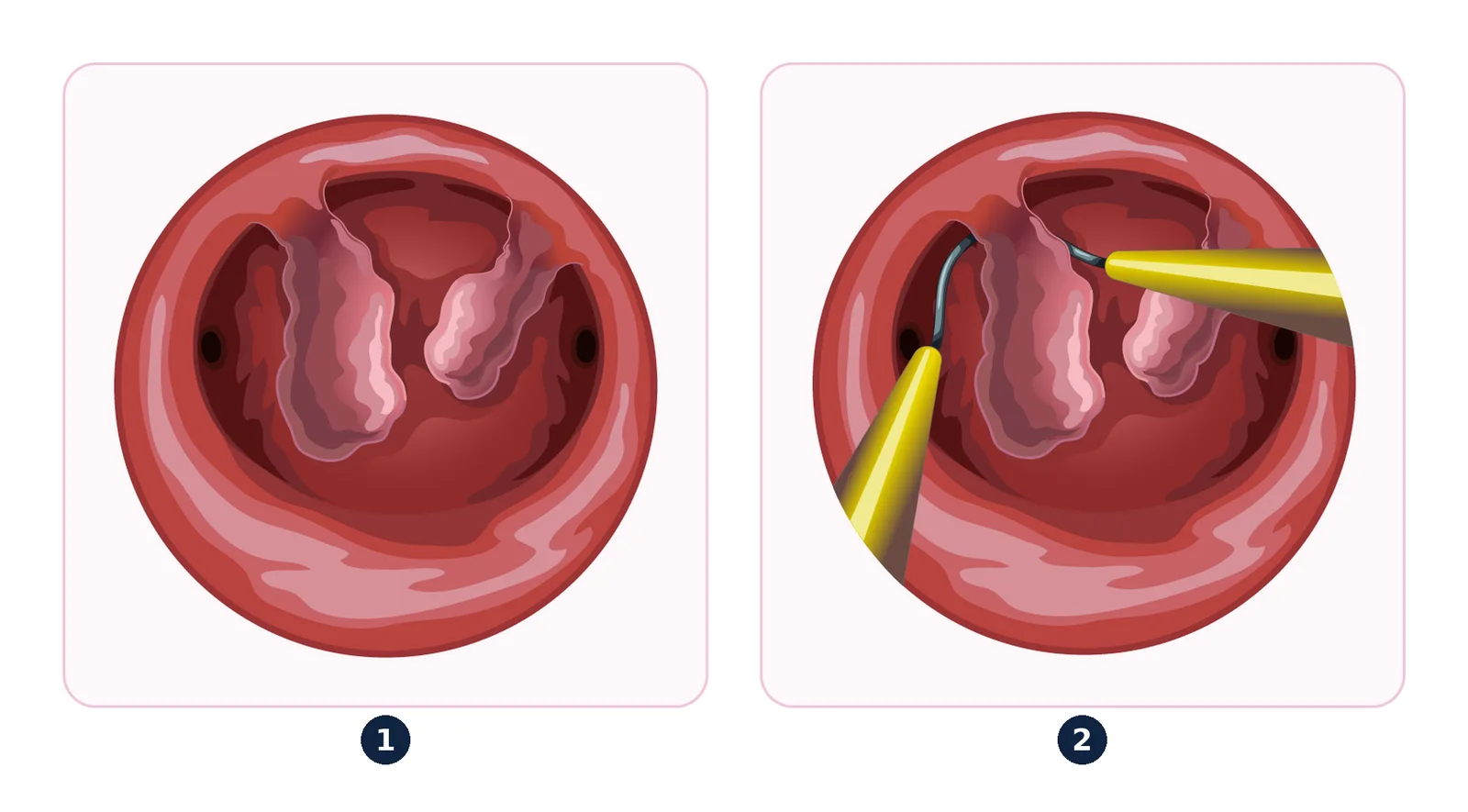
Polypectomy is performed by operative hysteroscopy: a thin camera is introduced through the natural passages (vagina, then cervix), without any incision on the abdomen. The cavity is distended with saline, and the polyp is removed using an electric loop, small scissors or a mechanical morcellation system, depending on its size and base.
Practical points:
- anaesthesia: depending on the size of the polyp and the context, the procedure may be performed in the consulting room without anaesthesia or in theatre under general or regional anaesthesia, the choice being explained at the consultation;
- duration: generally short, of the order of 10 to 30 minutes;
- hospital stay: most often as day surgery, with discharge the same day, at Hôpital privé Geoffroy Saint-Hilaire (Paris 5th), Clinique de la Muette (Paris 16th) or Clinique Ambroise Paré (Neuilly-sur-Seine);
- preparation: the CNGOF guidelines do not recommend routine cervical preparation with misoprostol before operative hysteroscopy;
- analysis: the polyp is always sent for histological examination; the result is sent to you via Doctolib or by post (by phone if it is urgent).
Recovery (bleeding, pain, return to activities) is detailed in the article after operative hysteroscopy.
What are the risks of the procedure?
Removal of a polyp is limited to the lining and does not cut into the uterine muscle.
Possible complications, which are rare, are:
- perforation of the uterus;
- infection of the uterus (endometritis);
- heavier bleeding than expected;
- excessive absorption of the distension fluid into the circulation, limited by monitoring the volume during the procedure (a maximum fluid deficit of 2,000 ml with saline, according to the CNGOF).
Can the polyp come back?
Yes. Recurrence is possible, especially if contributing factors persist (tamoxifen, excess weight, hormone therapy). A follow-up ultrasound may be offered in the event of new bleeding. Recurrence does not mean that the polyp was incompletely removed: a new polyp may form elsewhere in the cavity.
When should you seek urgent medical advice?
After a polypectomy, call 15 (SAMU) or 112 in France, or your local emergency number, or go to a gynaecological emergency department, in case of:
- very heavy bleeding (more than one pad per hour for two hours);
- fever above 38 °C;
- severe or increasing abdominal pain;
- feeling faint, breathlessness or repeated vomiting.
Would you like a medical opinion?Appointments in Paris 16th or 5th, or by video consultation.
Book an appointmentFrequently asked questions
Can a uterine polyp disappear on its own?
How a polyp will change cannot be predicted, and no medicine reliably makes it disappear. In a premenopausal woman without symptoms and with a small polyp, monitoring may be offered, because the risk of a precancerous or cancerous lesion is low (1.1%). After the menopause or in the event of bleeding, removal remains the rule.
Is polypectomy painful?
The procedure is performed under anaesthesia or with small-calibre instruments suited to use in the consulting room. Period-like pain is common in the hours that follow and generally settles with simple painkillers.
Can I become pregnant soon after removal of a polyp?
The endometrium heals quickly after a polypectomy. The recommended time before trying to conceive or having an embryo transfer is set at the post-operative consultation.
Is a hysterectomy needed for a polyp?
No. Hysteroscopy is sufficient in almost all cases. A hysterectomy is only discussed if the analysis reveals a precancerous or cancerous lesion, or in the event of another associated condition.
Is a polyp linked to cervical cancer?
No. An endometrial polyp is located in the body of the uterus and has no link with papillomavirus or with cervical cancer. Screening by smear or HPV test should continue as normal.
How much time off work do I need, and when can I resume sport and sex after a polyp is removed?
As a rough guide, and generally: you go home the same day, take 7 days off work for a desk job to 10 days for a physical job, can resume sport straight away except swimming, and should avoid sex, baths and tampons for about 15 days. These instructions are tailored to your situation at your consultation. The fees for the procedure are set out in a written quote given to you beforehand.
References
- Uglietti A, et al. The risk of malignancy in uterine polyps: A systematic review and meta-analysis. Eur J Obstet Gynecol Reprod Biol, 2019. doi:10.1016/j.ejogrb.2019.04.009 — PMID 31009859
- Bosteels J, et al. Hysteroscopy for treating subfertility associated with suspected major uterine cavity abnormalities. Cochrane Database Syst Rev, 2018. doi:10.1002/14651858.CD009461.pub4 — PMID 30521679
- Deffieux X, et al. Hysteroscopy: guidelines for clinical practice from the French College of Gynaecologists and Obstetricians. Eur J Obstet Gynecol Reprod Biol, 2014. doi:10.1016/j.ejogrb.2014.04.026 — PMID 24835861

Dr Olivier KadochObstetrician-gynaecologist and gynaecological surgeon in Paris, seeing patients in Paris 16th and at the Centre de la Femme Paris 5. Former chef de clinique-assistant (senior registrar) at the Paris public hospitals (AP-HP); individually accredited by the French National Authority for Health (HAS). RPPS 10003957809. Background and practice locations
A question about your situation?Appointments at the practice or by video consultation, usually within one week to 10 days.
Book an appointmentGeneral information article: it does not replace a medical consultation. In an emergency, call 15 or 112 in France, or your local emergency number.