Semen analysis: how it works, normal values (WHO 2021) and results
In brief
A semen analysis (sperm test) is a laboratory examination of a semen sample collected after 2 to 7 days without ejaculation; it measures the volume, number, movement (motility) and shape (morphology) of the sperm. Results are compared with the lower limits set by the World Health Organization (WHO) (6th edition, 2021), which are not fertility thresholds. An abnormal result should be checked with a second test, about three months later, before drawing any conclusion.
What is a semen analysis and when is it needed?
Semen analysis is the key test for assessing male fertility. The 2022 French guidelines from the French College of Gynaecologists and Obstetricians (CNGOF) list it, together with sperm morphology assessment and semen culture (to look for infection), among the first-line tests of any couple's fertility work-up.
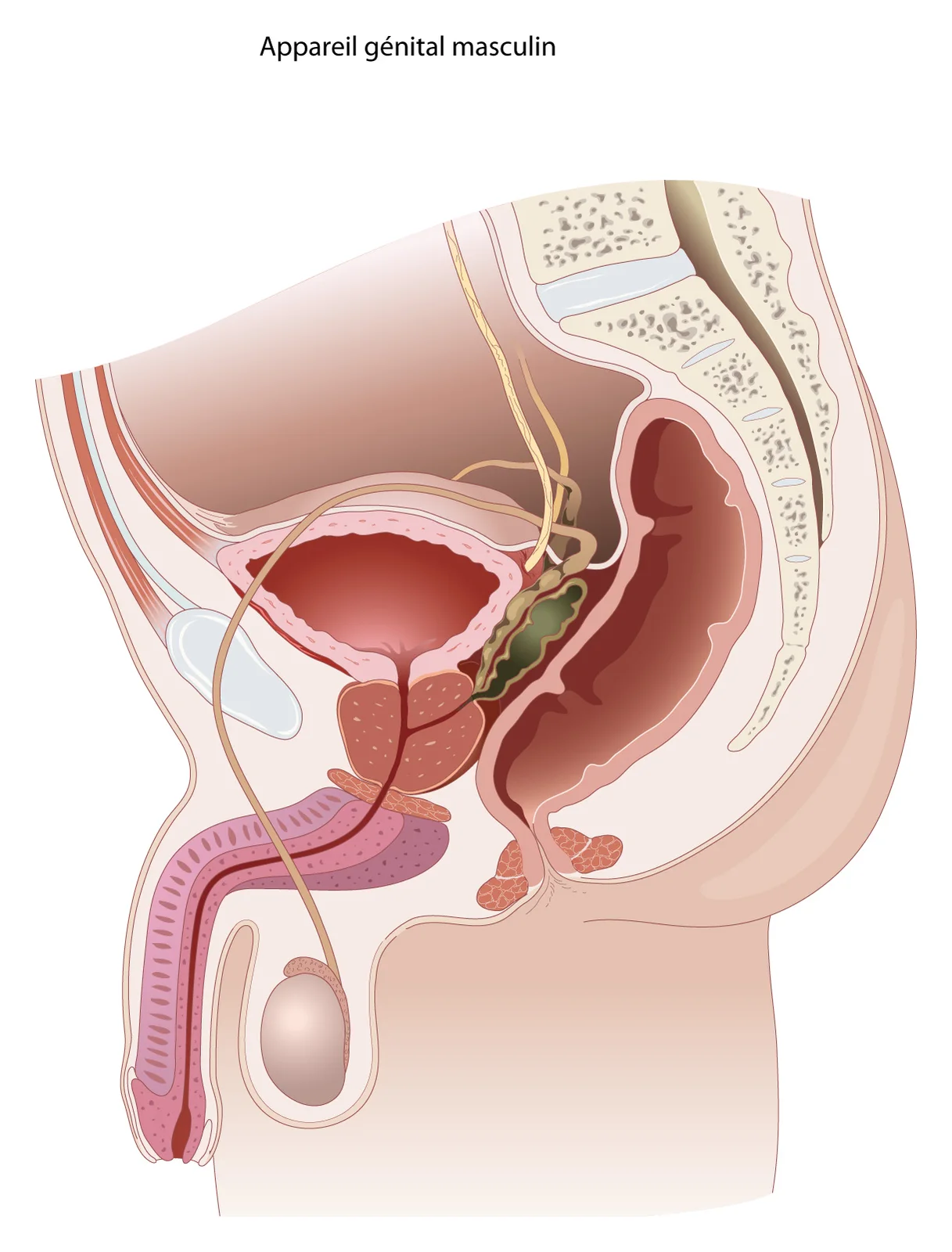
It is indicated:
- when a couple has not conceived after 12 months of trying, or after 6 months if the woman is 35 or older;
- before assisted reproduction treatment;
- before sperm freezing (for example before cancer treatment);
- to confirm there are no sperm after a vasectomy.
Testing the man at the same time as the woman avoids delaying the diagnosis: investigating endometriosis or an ovulation problem in the woman does not replace a semen analysis.
How do I prepare for a semen analysis and how is the sample collected?
- Abstinence: 2 to 7 days without ejaculation before the sample, as recommended by the WHO manual (2021). The laboratory records the exact number of days, which affects volume and sperm count.
- Where: preferably at the laboratory, in a dedicated room. Collection at home is sometimes accepted if the sample is brought in within an hour and kept close to body temperature. Appointment arrangements should be checked with the chosen laboratory.
- How: by masturbation, after passing urine and washing your hands and the tip of the penis, into a sterile pot provided. Ordinary condoms and lubricants should be avoided, as they can damage sperm.
- Complete sample: tell the laboratory if any part of the ejaculate is lost, especially the first part, which contains the most sperm.
- Tell the laboratory about: any fever in the last three months, medicines, exposure to heat or toxic substances. Sperm production takes about three months: a bout of fever can affect results for several weeks.
A single abnormal result is not enough to make a diagnosis. Semen parameters naturally vary from one sample to the next, depending on the abstinence period, recent health or collection errors. This is why guidelines require any abnormality to be confirmed on a second test before concluding or starting treatment.
What are normal semen analysis values?
The 6th edition of the WHO manual (2021) provides lower limits. They correspond to the 5th percentile of values seen in men whose partner conceived within a year.
| Parameter | Lower limit (WHO 2021) | Term used if the value is lower |
|---|---|---|
| Semen volume | 1.4 mL | Hypospermia |
| Concentration | 16 million per mL | Oligozoospermia |
| Total sperm count | 39 million per ejaculate | Oligozoospermia |
| Total motility | 42% | Asthenozoospermia |
| Progressive motility | 30% | Asthenozoospermia |
| Vitality (live sperm) | 54% | Necrozoospermia |
| Typical (normal) forms | 4% | Teratozoospermia |
A complete absence of sperm is called azoospermia. The laboratory also checks pH, viscosity, liquefaction, and the presence of white blood cells and clumping (agglutination). The 6th edition reintroduced the distinction between rapid and slow progressive motility.
What do the terms on a semen analysis report mean?
The semen analysis report uses precise vocabulary. Here are the most common terms:
- normozoospermia: all main parameters are above the lower limits;
- oligozoospermia: low sperm count or concentration;
- asthenozoospermia: insufficient motility;
- teratozoospermia: low proportion of typical forms, assessed by sperm morphology analysis;
- oligo-astheno-teratozoospermia (OAT): all three abnormalities above together;
- cryptozoospermia: very few sperm, found only after centrifugation;
- azoospermia: no sperm. It can be non-obstructive (the testicles produce none or very few) or obstructive (sperm are produced but a blockage prevents them from passing);
- aspermia: no ejaculate, to be distinguished from retrograde ejaculation, where semen goes back into the bladder;
- leucocytospermia: too many white blood cells, which may suggest inflammation or infection, to be confirmed by semen culture.
Sperm morphology analysis also details abnormalities of the head, midpiece and tail of the sperm. The 6th edition of the WHO manual stresses the value of this detailed analysis in understanding how the male reproductive organs are working.
How should semen analysis results be interpreted?
These limits do not separate fertile from infertile men. The authors of the WHO manual stress this point: a value below the limit does not rule out pregnancy, and a value above it does not guarantee one. The chances of pregnancy fall gradually as the parameters decrease, especially when several are affected.
Semen analysis results vary a great deal from one test to the next in the same man. According to the CNGOF (2022):
- if the first semen analysis is normal, there is no need to repeat it;
- if it is abnormal, it is repeated, usually about three months later to cover a full cycle of sperm production, and further tests are arranged.
The result is always discussed in light of the female partner's situation: age, ovarian reserve, condition of the fallopian tubes.
What tests are needed after an abnormal semen analysis?
The CNGOF (2022) and the European Association of Urology (EAU, 2025) recommend, when an abnormality is confirmed:
- an andrology consultation (urologist or andrologist), with a physical examination;
- a testicular ultrasound scan, to look for a varicocele, an abnormality or a tumour;
- hormone blood tests (FSH, LH, testosterone in particular).
Depending on the situation, a karyotype and genetic tests may be added, particularly in azoospermia or severe oligozoospermia. A sperm DNA fragmentation test may be considered in some situations, but its methods and thresholds are not standardised.
The EAU also recommends telling men with an abnormal semen analysis that it may be a marker of their general health, warranting medical follow-up.
What affects sperm quality and how can it be treated?
What can harm sperm
- smoking, cannabis and other drugs, heavy drinking;
- significant excess weight;
- prolonged heat on the testicles (sauna, hot baths, some occupations);
- anabolic steroids and testosterone taken without a medical reason, which can sharply reduce sperm production;
- some medicines and cancer treatments, infections, recent fever.
Treatment options
- lifestyle changes, whose effect can only be assessed after about three months;
- treatment of an identified cause (infection, hormonal problem, varicocele in some situations);
- assisted reproduction: intrauterine insemination if the abnormality is moderate, IVF, most often with ICSI if it is severe;
- in azoospermia, surgical sperm retrieval from the testicle, or the use of donor sperm.
Frequently asked questions
How long do semen analysis results take?
It depends on the laboratory, usually a few days, a little longer if semen culture is done. Results should be interpreted with the doctor who requested the test.
Is a semen analysis covered by health insurance?
In France, yes: it is covered by the Assurance maladie (national health insurance) when prescribed by a doctor, under the usual conditions for laboratory tests.
Does a man who already has a child need a semen analysis?
Yes, if the couple is seeking help for infertility. Sperm quality may have changed since then, and both partners need to be assessed.
Can supplements improve semen analysis results?
Some antioxidants are offered, but their benefit on live birth rates has not been clearly shown. Discuss them with your doctor before taking any.
Should a repeat semen analysis be done at the same laboratory?
It is preferable, as methods and experience vary between laboratories. A laboratory specialising in reproductive biology gives results that are more comparable from one test to the next.
References
- World Health Organization (WHO). WHO laboratory manual for the examination and processing of human semen, 6th edition. Geneva: WHO, 2021. who.int
- Sonigo C, et al. First-line management of infertile couple. Guidelines for clinical practice of the French College of Obstetricians and Gynecologists (CNGOF) 2022. Gynécologie Obstétrique Fertilité & Sénologie, 2024. doi:10.1016/j.gofs.2024.01.014 — PMID 38311310
- Minhas S, et al. European Association of Urology Guidelines on Male Sexual and Reproductive Health: 2025 Update on Male Infertility. European Urology, 2025. doi:10.1016/j.eururo.2025.02.026 — PMID 40118737

Dr Olivier KadochObstetrician-gynaecologist and gynaecological surgeon in Paris (16th and 5th arrondissements). Former chef de clinique-assistant (senior registrar) at the Paris public hospitals (AP-HP); individually accredited by the French National Authority for Health (HAS). RPPS 10003957809. Background and practice locations
A question about your situation?Appointments at the practice or by video consultation, usually within one week to 10 days.
Book an appointmentGeneral information article: it does not replace a medical consultation. In an emergency, call 15 or 112 in France, or your local emergency number.