Vaginal birth: stages of labour, key terms and monitoring
In brief
A vaginal birth happens in three stages: dilation of the cervix to 10 cm, the descent and birth of the baby, then delivery of the placenta. Contractions of the womb drive the whole process. Throughout labour, the team monitors your baby's heart rate, how labour is progressing and how you are, and only steps in when it is helpful.
What happens during a vaginal birth?
To be born, your baby has to pass three obstacles: the cervix, which has to open; the bony pelvis, which the baby passes through by turning; and the perineum, the group of muscles that closes the pelvis. Contractions of the womb provide the force needed. The main steps of your care are set out on the Giving birth in Paris page.
| Stage | What happens | Typical length |
|---|---|---|
| 1. Dilation ("first stage") | The cervix shortens (effacement), then opens to 10 cm. Latent phase up to 5–6 cm, then active phase. | Several hours, longer for a first baby |
| 2. Birth ("second stage") | The baby moves down into the pelvis, turns, then is born with the help of contractions and pushing. | From a few minutes to more than two hours |
| 3. Placenta ("third stage") | The placenta separates and comes out, then the womb contracts to stop the bleeding. | Usually less than 30 minutes |
What words will I hear in the delivery room?
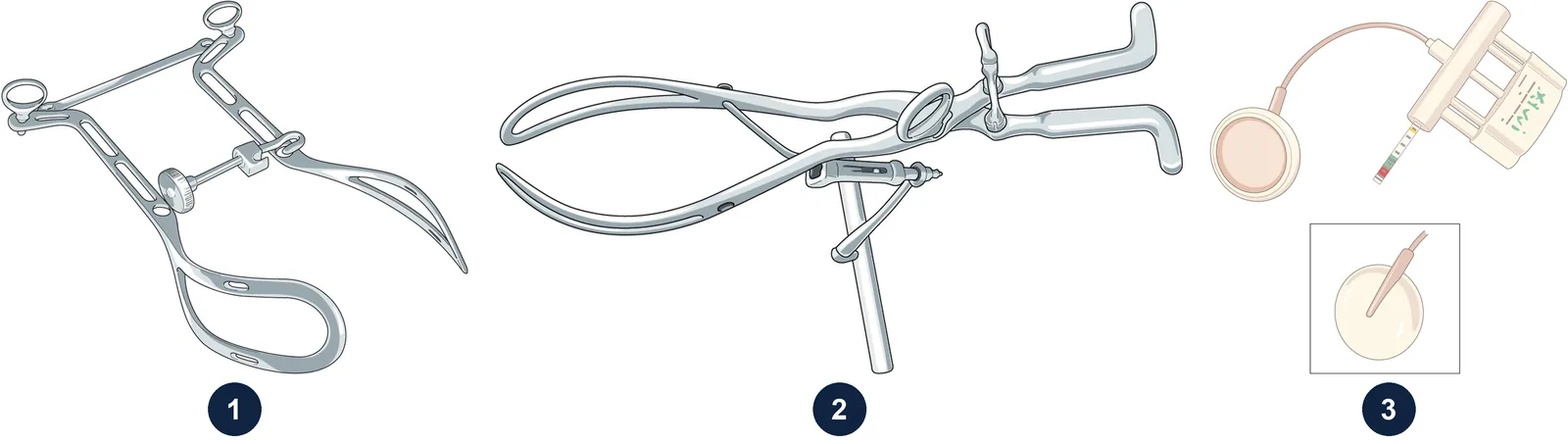
- Labour: the period when contractions become regular, closer together and painful, and change the cervix.
- Effacement and dilation: the cervix shortens, then opens; full dilation is 10 cm.
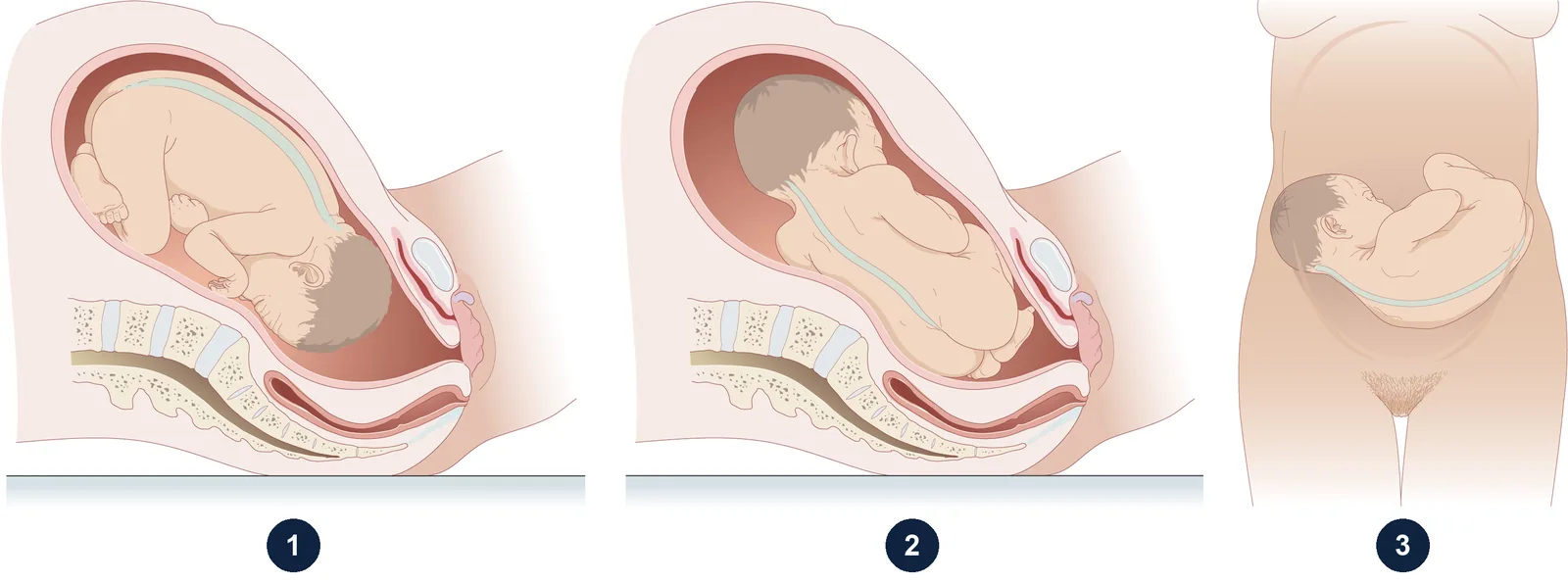
- Presentation: the part of the baby that comes first into the pelvis, the head (cephalic presentation) in the vast majority of cases, sometimes the bottom (breech presentation).
- Engagement: the moment when the widest part of the head passes through the entrance of the pelvis, called the pelvic inlet.
- Pelvic cavity: the space inside the pelvis where the head moves down and turns.
- Crowning and birth of the head: the head comes out through the pelvic outlet, then through the perineum.
- Monitoring (CTG): a recording of your baby’s heart rate and your contractions.
- Episiotomy: a cut in the perineum, made only when needed and with your consent.
- Third stage: delivery of the placenta and membranes.
How does the cervix dilate during labour?
At first, contractions are spaced out and irregular: this is the latent phase. The cervix thins and starts to open. This phase can be long, especially for a first baby, and is often partly spent at home.
The active phase starts at 5 to 6 cm. Contractions become stronger, longer and closer together. The speed of dilation varies a lot from one woman to another. The French National Authority for Health (HAS) guidelines on normal birth consider that labour has stalled when dilation progresses by less than 1 cm in 4 hours between 5 and 7 cm, or by less than 1 cm in 2 hours beyond 7 cm. In that case, the team offers to break your waters if they are intact or, if they have already broken and contractions are not strong enough, an oxytocin drip.
As long as labour is progressing and your baby is well, no intervention is needed. You can drink, move around and change position.
How does the baby pass through the pelvis?
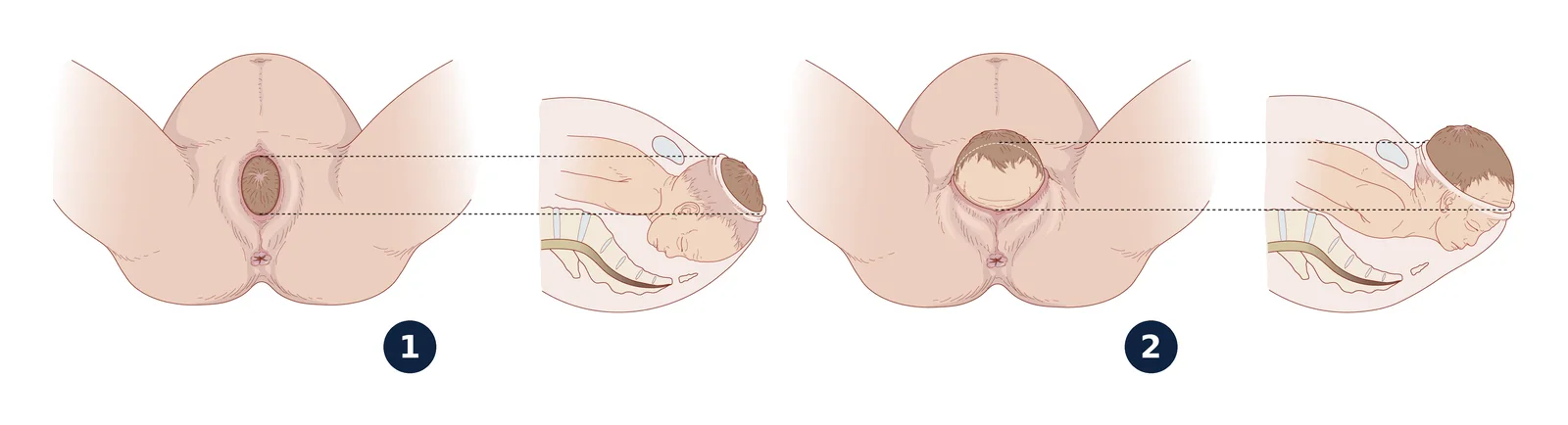
The bony pelvis is a rigid, curved canal. It is bounded at the front by the pubic bone, at the back by the sacrum and coccyx, and on the sides by the hip bones. To fit through it, your baby’s head makes a series of movements:
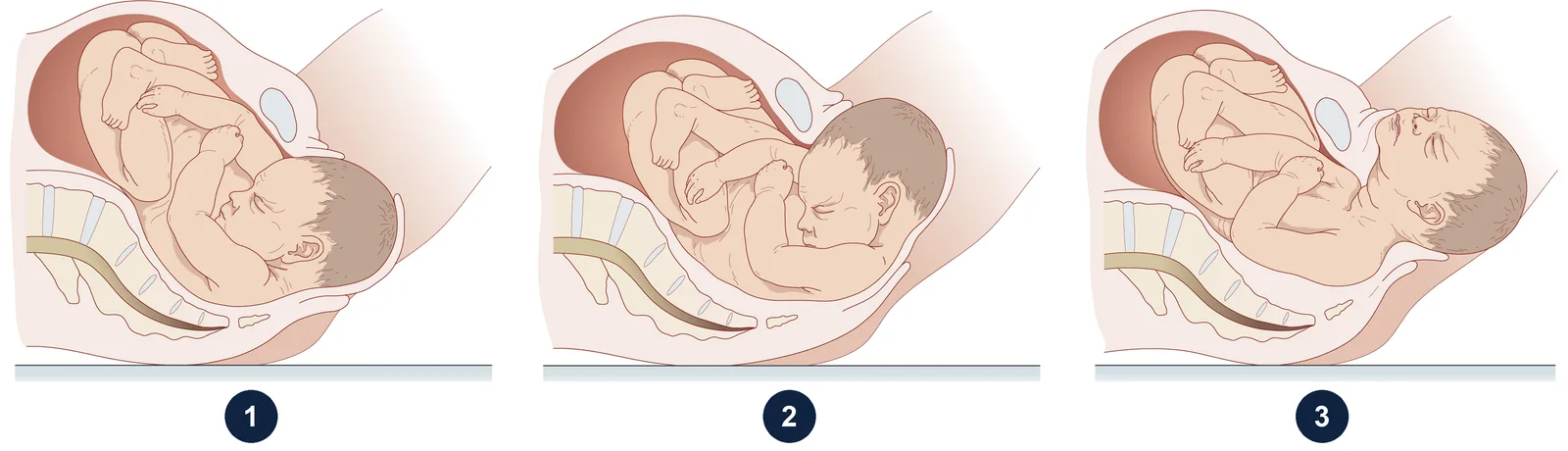
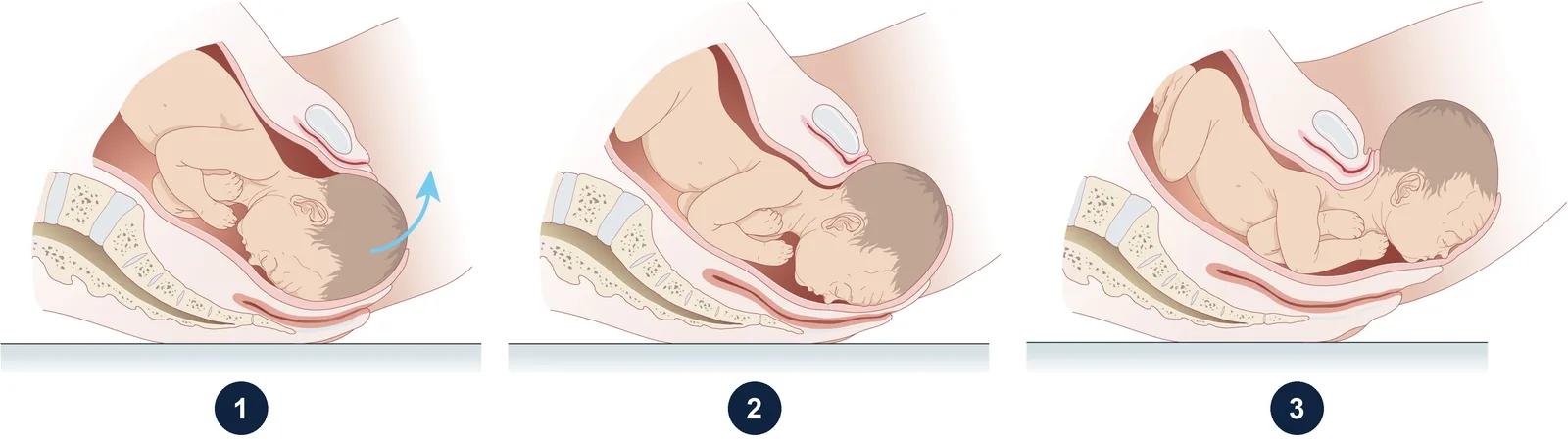
- Flexion: the chin moves towards the chest, which reduces the diameter of the head.
- Engagement and descent: the head passes through the pelvic inlet, then moves down.
- Rotation: inside the pelvis, the head turns to line up with the long axis of the pelvic outlet, usually with the occiput (back of the skull) facing forwards.
- Extension and birth: the head tilts back under the pubic bone and comes out, followed by the shoulders and then the body.
When should I start pushing?
According to the HAS, pushing as soon as you are fully dilated is not recommended. It is better to let the head come down on its own, which makes pushing more effective. No pushing technique has been shown to be better than another: the team guides you based on what you feel. As the head is born, the midwife or doctor controls its delivery and supports the perineum, which reduces the risk of a severe tear.
What if my baby is breech?
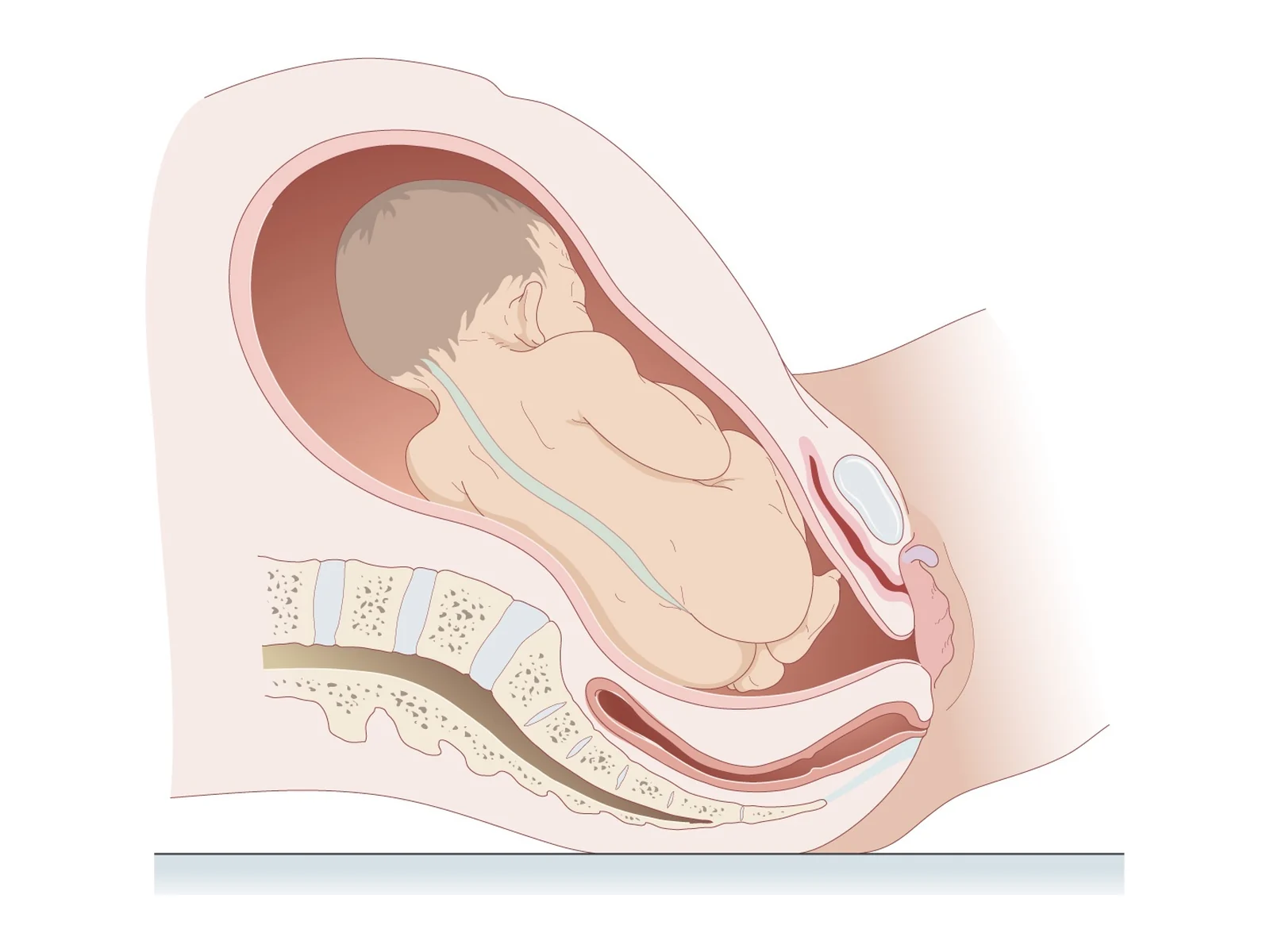
About 5% of babies are in a breech position at birth in France, according to the French College of Gynaecologists and Obstetricians (CNGOF). The baby may be in a complete breech (legs folded, cross-legged) or a frank breech (legs straight up in front of the body).
An external cephalic version may be offered from 36 weeks of pregnancy (weeks of amenorrhoea). The doctor tries to turn the baby through your abdomen, under ultrasound guidance. It reduces the number of breech babies at birth and the need for caesarean section.
If your baby stays breech, a vaginal birth is a reasonable option in most cases, under certain conditions (pelvic imaging, head well flexed on ultrasound). A planned caesarean section is the other option. The choice is made with you, once you have been told about the benefits and risks of each.
How are you and your baby monitored during labour?
- Your baby: the monitor records the heart rate and your contractions. If there is an abnormality, further tests or a faster birth (ventouse, forceps or caesarean section) may be suggested.
- Progress: the midwife regularly checks your cervix and the level of the baby’s head, and records the findings on a partogram.
- Your condition: blood pressure, pulse, temperature and bladder checks.
- Pain: an epidural provides strong pain relief while still letting you take part in the birth. Other options (bath, birthing ball, positions, breathing) may be offered depending on your wishes and the maternity unit.
The team includes midwives, nursery nurses, the obstetrician-gynaecologist and the anaesthetic team. Dr Kadoch delivers his patients' babies at Maternité Sainte-Félicité and Clinique Sainte-Thérèse. An obstetrician is on site at Sainte-Félicité and on call at Sainte-Thérèse, and your partner can be present during the birth. Your birth plan can be discussed at your antenatal appointments.
After the birth, an injection of oxytocin helps prevent heavy bleeding (see delivery of the placenta and postpartum haemorrhage). The perineum is examined, and any tear is stitched.
When should I go to the maternity unit?
Go to the maternity unit if:
- your contractions are regular, painful, getting closer together and do not ease with rest (the maternity unit will give you its own instructions on when to come in);
- you are leaking fluid (your waters have broken);
- you are bleeding;
- your baby is moving less;
- you have a fever, a severe headache or problems with your vision.
If you have heavy bleeding, feel faint or the birth is imminent, call 15 (SAMU) or 112 in France, or your local emergency number.
Would you like a medical opinion?Appointments in Paris 16th or 5th, or by video consultation.
Book an appointmentFrequently asked questions
How long does a first labour last?
It varies a lot from one woman to another, and the latent phase alone can last a long time. A first labour is usually longer than later ones.
Is an episiotomy routine?
No. The 2018 CNGOF guidelines advise against routine episiotomy. It can be helpful in some situations, especially for a ventouse or forceps birth, and requires your consent.
Can I eat and drink during labour?
Drinking clear fluids is generally allowed. The rules on eating depend on the maternity unit and your situation.
Does an epidural slow labour down?
It can make the pushing stage a little longer. That is why the team lets the baby's head come down before asking you to push and adapts how labour is managed.
When can I have sex and do sport again after a vaginal birth?
As a general guide, sex can be resumed once the bleeding has stopped and any scar is no longer painful, often 4 to 6 weeks after the birth. Strenuous sport is usually resumed at around 6 to 8 weeks, once your perineum has been checked and, if needed, after pelvic floor rehabilitation. These guidelines are adapted at your postnatal check-up. Fees for the birth are set out in a written quote given in advance.
References
- Lejeune-Sadaa V, et al. Accouchement normal : accompagnement de la physiologie et interventions médicales. Recommandations de la HAS avec le CNGOF et le CNSF [Normal childbirth: physiologic labour support and medical procedures. HAS guidelines with the CNGOF and CNSF]. Gynecol Obstet Fertil Senol, 2020. doi:10.1016/j.gofs.2020.09.017 — PMID 33011382
- Ducarme G, et al. Perineal prevention and protection in obstetrics: CNGOF clinical practice guidelines. J Gynecol Obstet Hum Reprod, 2019. doi:10.1016/j.jogoh.2018.12.002 — PMID 30553051
- Sentilhes L, et al. Breech presentation: Clinical practice guidelines from the French College of Gynaecologists and Obstetricians (CNGOF). Eur J Obstet Gynecol Reprod Biol, 2020. doi:10.1016/j.ejogrb.2020.03.033 — PMID 32249011

Dr Olivier KadochObstetrician-gynaecologist and gynaecological surgeon in Paris, seeing patients in Paris 16th and at the Centre de la Femme Paris 5. Former chef de clinique-assistant (senior registrar) at the Paris public hospitals (AP-HP); individually accredited by the French National Authority for Health (HAS). RPPS 10003957809. Background and practice locations
A question about your situation?Appointments at the practice or by video consultation, usually within one week to 10 days.
Book an appointmentGeneral information article: it does not replace a medical consultation. In an emergency, call 15 or 112 in France, or your local emergency number.