Delivery of the placenta and postpartum haemorrhage: what you need to know
In brief
Bleeding after delivery of the placenta (postpartum haemorrhage) is a blood loss of at least 500 ml within 24 hours of the birth; it is severe from 1,000 ml. The third stage of labour is the delivery of the placenta and membranes, most often within 30 minutes of the birth. A preventive injection of oxytocin is recommended for all women, whatever the mode of birth, to reduce this risk.
What is the third stage of labour (delivery of the placenta)?
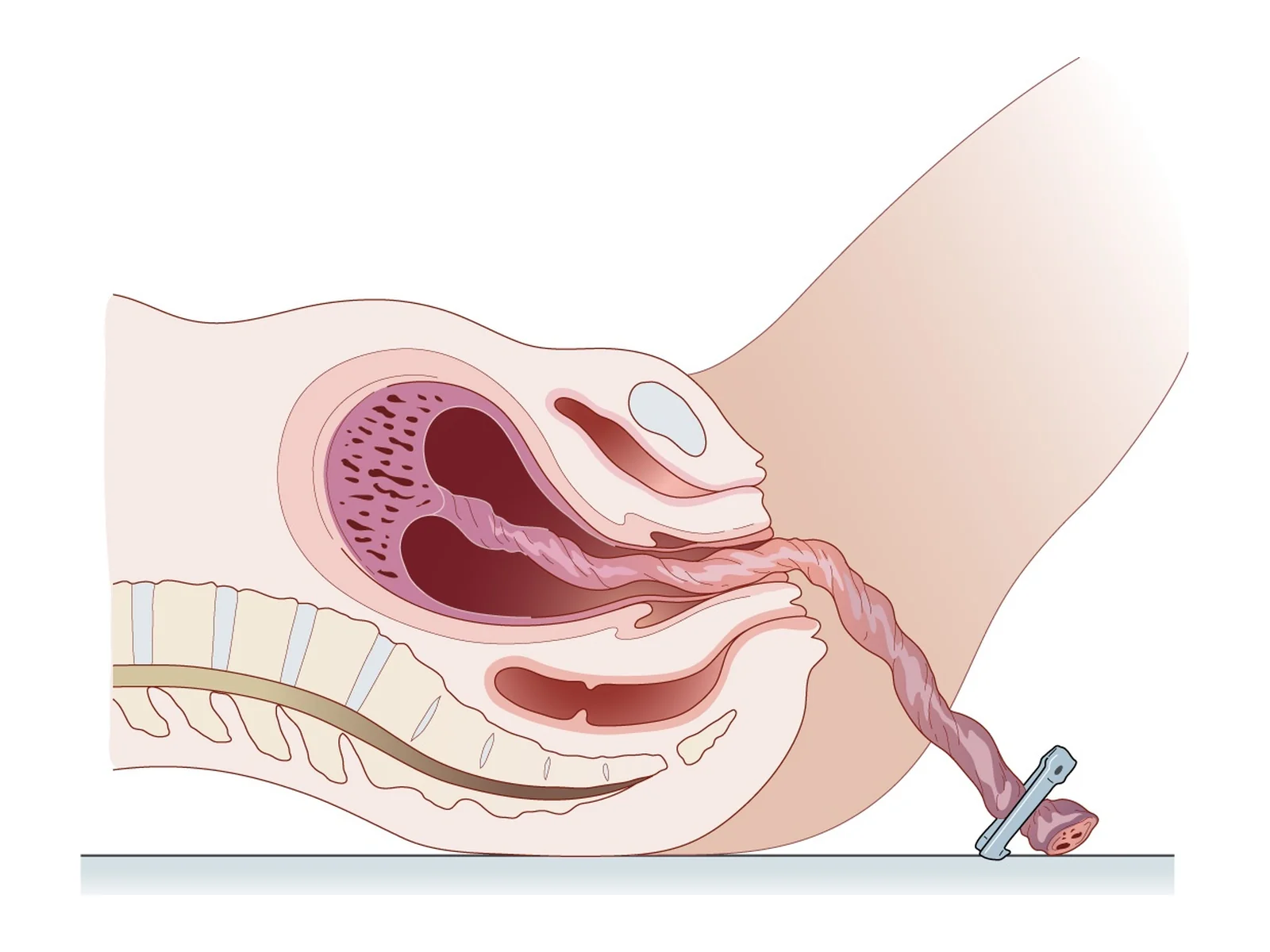
Delivery of the placenta is the third and final stage of labour, after dilation of the cervix and the birth of the baby. It is when the placenta and the membranes that surrounded the baby separate and are pushed out. To see where this stage fits within the birth as a whole, see our page Giving birth in Paris.
It happens in three steps:
- Separation: a few minutes after the birth, the uterus contracts again and the placenta separates from the uterine wall.
- Expulsion: the placenta moves down into the vagina and comes out, often helped by a gentle push.
- Contraction of the uterus: the uterus contracts strongly and becomes firm, like a "ball". Its muscle fibres squeeze the blood vessels that supplied the placenta: this is the natural mechanism that stops the bleeding.
The midwife or doctor then examines the placenta to check that it is complete, and checks the perineum and vagina for any tear.
How long does it take to deliver the placenta?
Most often, the placenta comes out within 30 minutes of the birth. The French guidelines from the French National Authority for Health (HAS) on normal birth (2017) set out what to do when the placenta does not separate. If there is no bleeding, a manual removal of the placenta is carried out between 30 and 60 minutes after the birth. The doctor or midwife then separates the placenta by hand, under anaesthesia (an epidural already in place or a brief general anaesthetic). If there is bleeding, this is done without waiting.
After the placenta is delivered, you stay for about two hours in the birth room or nearby. During this time, the team regularly checks the firmness of your uterus, the amount of bleeding, your pulse and your blood pressure.
What is postpartum haemorrhage and what causes it?
The French College of Gynaecologists and Obstetricians (CNGOF) defines postpartum haemorrhage as a blood loss of at least 500 ml within 24 hours of the birth. It is called severe from 1,000 ml. This definition applies after a vaginal birth as well as after a caesarean section. It is one of the leading causes of maternal death worldwide, and a major cause of serious complications in France.
What are the causes?
| Cause | Mechanism |
|---|---|
| Uterine atony | The uterus does not contract enough after the placenta is delivered: this is the most common cause. |
| Retained placenta | The placenta, or a fragment of it, remains in the uterus and prevents it from contracting. |
| Injuries to the birth canal | A tear in the cervix, vagina or perineum, or a haematoma. |
| Clotting disorders | Present before pregnancy, or developing during pregnancy or during the haemorrhage itself. |
Some situations increase the risk: a long or induced labour, a large baby, a twin pregnancy, too much amniotic fluid, a previous haemorrhage, an abnormally positioned placenta. They are identified during pregnancy care so that management can be adapted.
However, a haemorrhage can occur without any risk factor. This is why prevention and monitoring apply to all women, not only to those considered at risk. Blood loss is estimated by the team’s observation; a graduated collection bag is placed under you as soon as abnormal bleeding appears, to measure the volume lost precisely and adapt treatment.
How is postpartum haemorrhage prevented?
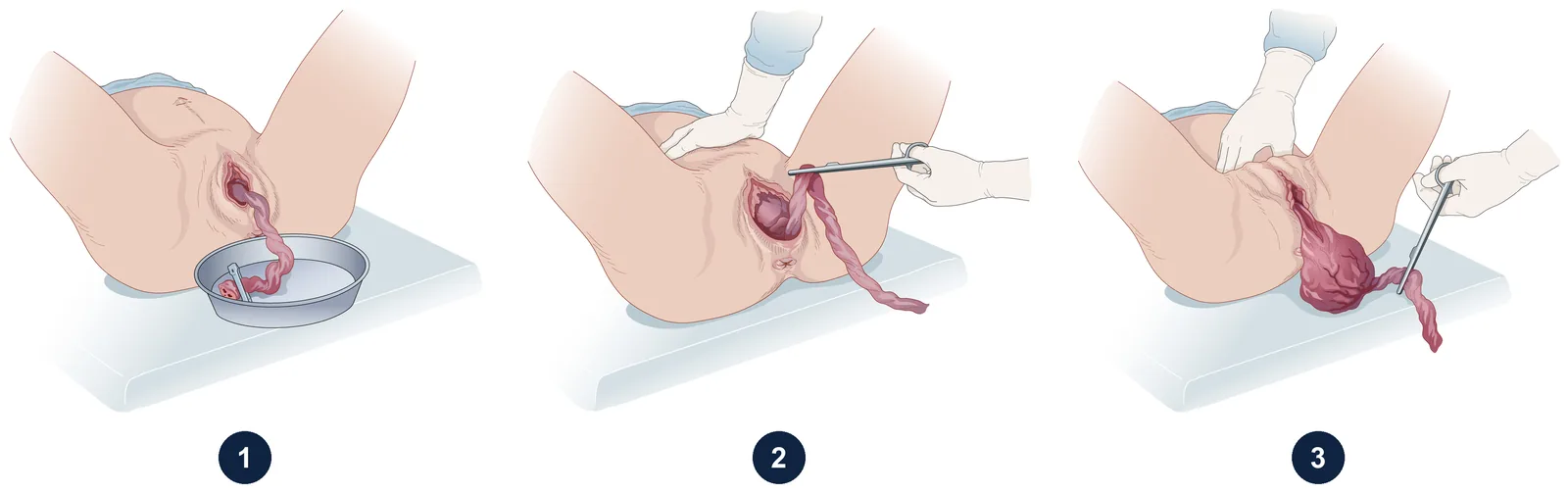
The CNGOF recommends a routine injection of oxytocin, the hormone that makes the uterus contract, just after the baby is born, whatever the mode of birth. It is given by slow intravenous injection or into a muscle. This reduces how often haemorrhage occurs.
After a vaginal birth, the other steps long carried out routinely (pulling on the cord, massaging the uterus, emptying the bladder) are no longer recommended as routine to prevent haemorrhage.
During pregnancy, screening for and treating anaemia helps you tolerate any bleeding better. If you have risk factors, the anaesthetic and obstetric teams are informed in advance.
How is postpartum haemorrhage treated?
Treatment follows a step-by-step protocol, defined by the CNGOF with the French Society of Anaesthesia and Intensive Care (SFAR). The team acts on both the cause and the consequences of the bleeding at the same time.
- Immediate steps: manual exploration of the uterus (the doctor checks by hand that the uterus is empty), examination of the cervix and vagina with a speculum, uterine massage, a further injection of oxytocin followed by a drip, preventive antibiotics.
- Second-line medicines if bleeding continues: sulprostone, a more powerful prostaglandin, within 30 minutes. Tranexamic acid, which limits the breakdown of blood clots, is recommended by the WHO for any postpartum haemorrhage, whatever the cause, alongside other treatments and as early as possible, within 3 hours of birth. The international WOMAN trial (20,000 women) showed that it reduces deaths from haemorrhage when given quickly, ideally within 3 hours.
- Intrauterine balloon: a balloon inflated inside the uterus compresses the blood vessels.
- Embolisation or surgery if the previous treatments are not enough. The radiologist blocks the uterine arteries from inside the blood vessels, or the surgeon ties off the vessels or places compression sutures. Removal of the uterus (hysterectomy) is the last resort.
At the same time, the anaesthetic team replaces the losses: fluids, warming, oxygen and, if necessary, transfusion of red blood cells, plasma or fibrinogen.
What is recovery like after a postpartum haemorrhage?
Marked tiredness is common, linked to anaemia. Iron treatment, by mouth or by drip, is often prescribed. Your stay in the maternity unit may be a little longer; its length is adapted to each situation.
Breastfeeding remains possible, even if it may get off to a slower start. The event can also be experienced as a shock. Do not hesitate to talk about it again with the team or at your postnatal appointment. If anxiety, nightmares or sadness persist, let us know: psychological support can be offered. If you are in distress or having dark thoughts, in France, the national suicide prevention line 3114 answers 24 hours a day.
For a future pregnancy, the history of haemorrhage is recorded in your file, so that the birth can be planned accordingly.
When should I seek urgent care for bleeding after going home?
A haemorrhage can also happen later, in the days or weeks after the birth. Contact the emergency department of your maternity unit immediately, or call 15 or 112 in France, or your local emergency number, if you feel faint, or if:
- you have to change a soaked pad in less than an hour;
- you are passing large clots;
- you feel dizzy, have palpitations, are breathless or very pale;
- the bleeding comes with fever, pain or an unusual smell.
To find out what is normal in the weeks after birth, see our article on persistent bleeding after childbirth.
Would you like a medical opinion?Appointments in Paris 16th or 5th, or by video consultation.
Book an appointmentFrequently asked questions
Is delivering the placenta painful?
It is usually only mildly painful, especially compared with the birth. If you have an epidural, it also covers this stage.
Can I hold my baby skin to skin while the placenta is delivered?
Yes, skin-to-skin contact can continue during delivery of the placenta if your condition and your baby's allow it. Putting the baby to the breast early actually helps the uterus contract.
Does a caesarean protect against postpartum haemorrhage?
No. Haemorrhage can occur after a caesarean just as after a vaginal birth, and the same prevention with oxytocin is used.
Will a postpartum haemorrhage happen again in my next pregnancy?
The risk is higher than for women with no such history, but it will not necessarily happen again. It is taken into account when planning your next birth.
References
- Sentilhes L, et al. — Postpartum hemorrhage: guidelines for clinical practice from the French College of Gynaecologists and Obstetricians (CNGOF): in collaboration with the French Society of Anesthesiology and Intensive Care (SFAR). Eur J Obstet Gynecol Reprod Biol, 2016 — doi:10.1016/j.ejogrb.2015.12.012 — PMID 26773243
- Lejeune-Sadaa V, Mattuizzi A, Sentilhes L — [Normal childbirth: physiologic labor support and medical procedures. Guidelines of the French National Authority for Health (HAS) with the collaboration of the French College of Gynaecologists and Obstetricians (CNGOF) and the French College of Midwives (CNSF) - When and how to take medical action during labor?]. Gynecol Obstet Fertil Senol, 2020 — doi:10.1016/j.gofs.2020.09.017 — PMID 33011382
- WOMAN Trial Collaborators — Effect of early tranexamic acid administration on mortality, hysterectomy, and other morbidities in women with post-partum haemorrhage (WOMAN): an international, randomised, double-blind, placebo-controlled trial. Lancet, 2017 — doi:10.1016/S0140-6736(17)30638-4 — PMID 28456509

Dr Olivier KadochObstetrician-gynaecologist and gynaecological surgeon in Paris, seeing patients in Paris 16th and at the Centre de la Femme Paris 5. Former chef de clinique-assistant (senior registrar) at the Paris public hospitals (AP-HP); individually accredited by the French National Authority for Health (HAS). RPPS 10003957809. Background and practice locations
A question about your situation?Appointments at the practice or by video consultation, usually within one week to 10 days.
Book an appointmentGeneral information article: it does not replace a medical consultation. In an emergency, call 15 or 112 in France, or your local emergency number.