Pelvic organ prolapse: symptoms and treatment
In brief
Pelvic organ prolapse (genital prolapse) is when the bladder, uterus or rectum slips down into the vagina because the supporting tissues of the pelvis have weakened. It is not dangerous but can be uncomfortable: treatment depends on how much it bothers you, with pelvic floor exercises, a pessary or surgery. If it causes no discomfort, simple monitoring is often enough.
What is pelvic organ prolapse?
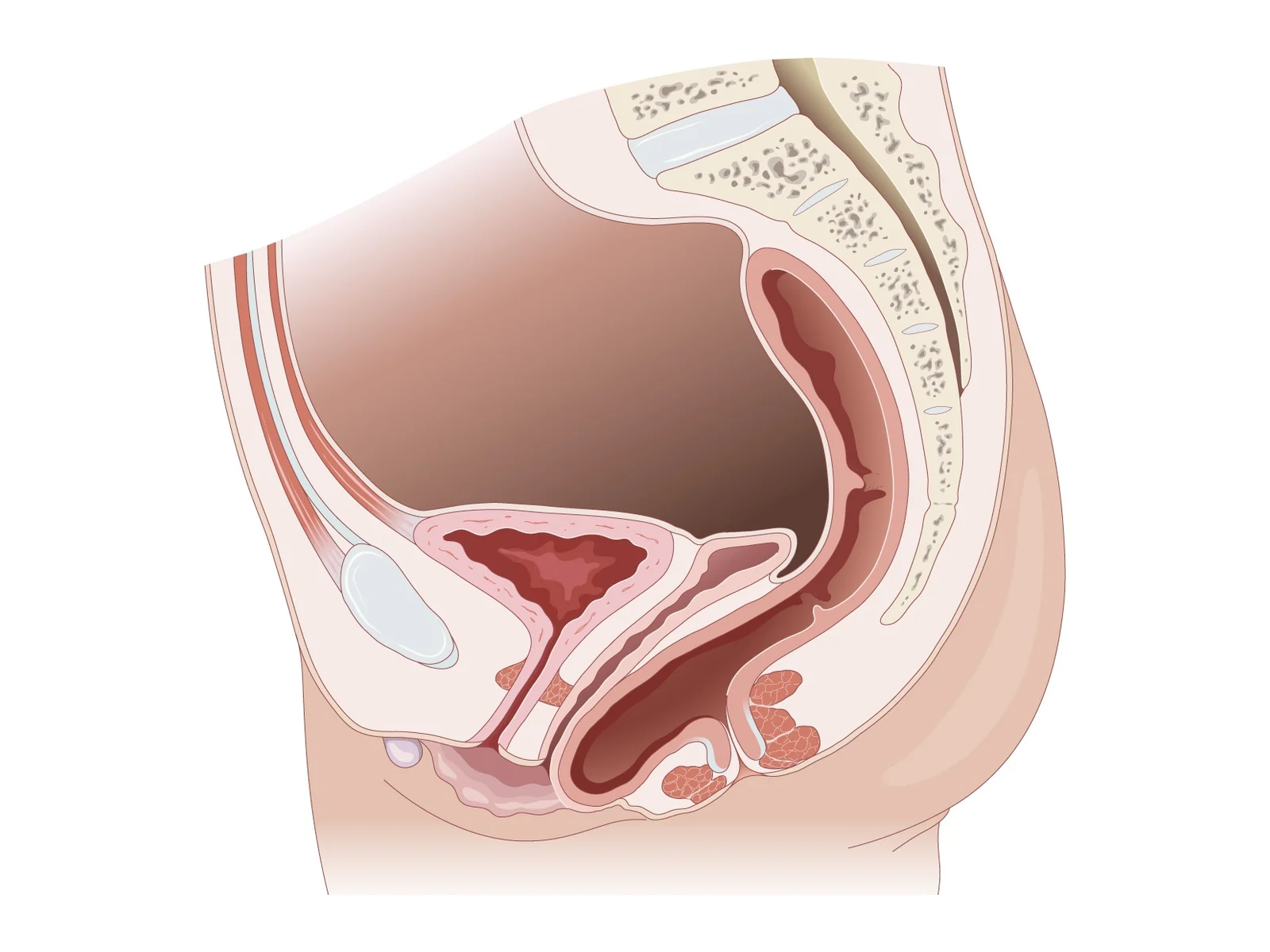
The pelvic floor is a group of muscles, ligaments and tissues that holds the bladder, uterus and rectum in place. When this support weakens, one or more of these organs drops and bulges into the vagina, sometimes as far as outside the vulva: this is pelvic organ prolapse, also called genital prolapse.
It is a common condition, especially after childbirth and after the menopause. It is managed as a functional problem: the aim is your comfort, not treating a serious disease. Surgical options are described on the Gynaecological surgery page.
The different types of prolapse
Prolapse is classified according to which organ drops. Several compartments can be affected at the same time.
| Type | Organ involved | Vaginal wall |
|---|---|---|
| Cystocele | Bladder | Anterior (front) wall |
| Uterine prolapse | Uterus and cervix | Top of the vagina |
| Rectocele | Rectum | Posterior (back) wall |
| Enterocele | Pouch of Douglas, sometimes small bowel | Upper part of the back wall |
| Vaginal vault prolapse | Top of the vagina | After removal of the uterus |
What causes pelvic organ prolapse?
Prolapse almost always results from several factors adding up over the years:
- Vaginal births, especially if there have been many, with a large baby or an assisted delivery (forceps, ventouse).
- The menopause: falling oestrogen makes the tissues less resilient.
- Age, which reduces the quality of the supporting tissues.
- Repeated pressure on the abdomen: excess weight, chronic constipation with straining, chronic cough, heavy lifting.
- Previous pelvic surgery, particularly a hysterectomy.
- Naturally weaker tissues, sometimes running in families.
A Cochrane review confirms that age, number of births and body mass index are the recognised risk factors.
What are the symptoms of a prolapse?
Some women have no symptoms at all: the prolapse is then found during a routine examination. Others notice:
- a feeling of a lump or bulge in the vagina, sometimes visible or felt at the vulva;
- a dragging or heavy feeling in the pelvis, worse at the end of the day, when standing or with effort, and easing when lying down;
- urinary symptoms: needing to go often, a weak stream, a feeling of incomplete emptying, needing to push the bulge back to pass urine, or leaking with effort;
- bowel symptoms: difficulty opening the bowels, needing to press on the perineum or inside the vagina, especially with a rectocele;
- discomfort during sex or anxiety about intimacy.
Stress urinary leakage often occurs alongside: it is covered in our article on stress urinary incontinence after the menopause.
How is a prolapse diagnosed?
The diagnosis is clinical. During the consultation, the gynaecologist asks about your symptoms, their impact and what you hope for, then examines you lying down, at rest and while bearing down, and sometimes standing. Each compartment (front, middle, back) and the stage of the prolapse are assessed:
- stage 1: the prolapse stays inside the vagina;
- stage 2: it reaches the vaginal opening;
- stage 3 and beyond: it extends beyond the vulva.
The examination also looks for stress urinary incontinence, which the prolapse can sometimes hide, and assesses the strength of the pelvic floor muscles.
Further tests are only requested case by case: a pelvic ultrasound to check the uterus and ovaries, or urodynamic tests if there are urinary symptoms before surgery. Without urinary symptoms, urodynamic testing is not useful.
Can a prolapse be treated without surgery?
A prolapse that causes little discomfort can simply be monitored: it does not always get worse, and no treatment is a legitimate option. When treatment is wanted, there are several solutions.
Lifestyle measures
Losing weight if you are overweight, treating constipation, avoiding straining, and learning to protect your pelvic floor when lifting: these measures limit worsening.
Pelvic floor exercises
Guided by a physiotherapist or a midwife, they strengthen the pelvic floor muscles. According to the Cochrane review, a supervised programme lasting several months improves the symptoms and stage of mild to moderate prolapse. It requires regular practice.
Pessary
A pessary is a soft device, usually made of silicone, placed in the vagina to support the organs. It can be a long-term solution or a stopgap before surgery. It needs a fitting to find the right size and regular check-ups to make sure the vaginal lining tolerates it well.
Local oestrogen treatment
After the menopause, vaginal oestrogen improves the quality of the vaginal lining. According to a 2023 Cochrane review, it has no proven effect on the prolapse itself, but combined with a pessary it reduces vaginal irritation, and combined with surgery it lowers the rate of urinary infections after the operation.
When is prolapse surgery needed and how is it done?
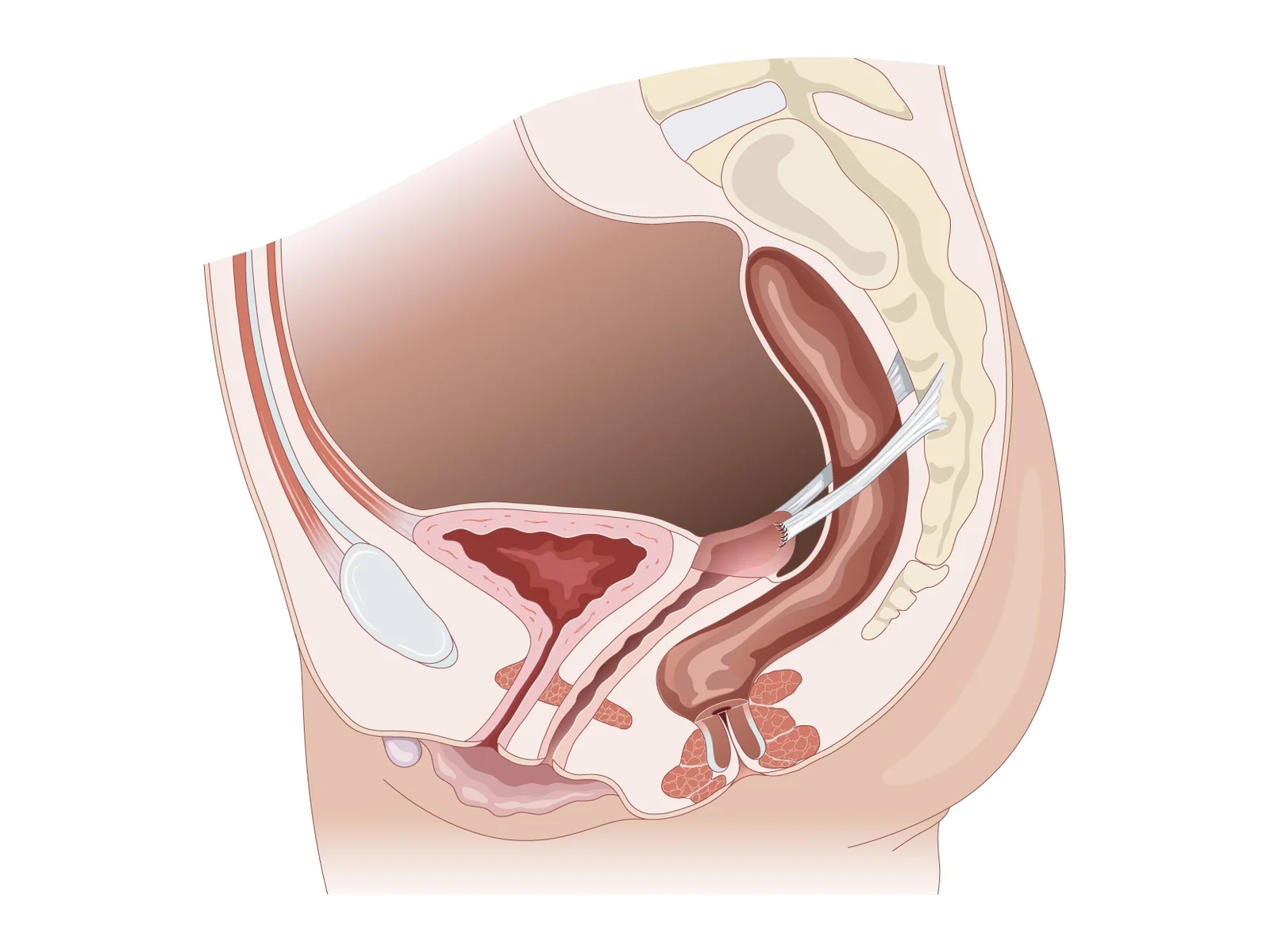
Surgery is offered when symptoms are significant and conservative treatments are not enough or not suitable. The choice of technique depends on the type of prolapse, your age, your general health, your medical history, your sex life and any plans for pregnancy. It is discussed in consultation, with information about the alternatives.
| Approach | How it works | Key points |
|---|---|---|
| Vaginal approach | Repair and fixation of the organs through the vagina, with or without removal of the uterus | No abdominal scar; particularly suitable for older patients |
| Sacrocolpopexy (abdominal approach) | Attaching the vagina, and sometimes the uterus, to the front of the sacrum with mesh strips | Laparoscopic approach recommended when indicated; see our article on laparoscopy |
French specialist societies (AFU, CNGOF, SIFUD-PP, SNFCP, SCGP) state that removing the uterus is not routine during prolapse repair, and that synthetic mesh placed between the bladder and vagina through the vagina should be considered case by case, because its long-term balance of benefits and risks is uncertain. If stress urinary incontinence is also present, it can be treated at the same time or later, after discussion.
What is recovery like after prolapse surgery and what are the risks?
Recovery depends on the approach and any additional procedures. The figures below are a guide only and are tailored to each patient at the consultation:
- Length of hospital stay: generally about 3 days for the vaginal approach, 3 to 4 days after laparoscopic sacrocolpopexy.
- Time off work: generally 3 to 4 weeks for desk work, 6 to 8 weeks for physical work.
- Returning to sport and lifting: generally after 6 to 12 weeks.
- Resuming sex: generally once healing is complete, on the surgeon's advice at the post-operative appointment.
Documented risks include: bleeding or haematoma, urinary infection (common after a catheter), temporary difficulty emptying the bladder, pain, injury to the bladder, ureter or rectum (rare), blood clots, new or unmasked stress urinary leakage, pain during sex, mesh-related complications (exposure in the vagina, pain) and recurrence of the prolapse, in the same or another compartment. These risks vary with the technique and are explained to you before any decision.
When should I see a doctor urgently?
A prolapse is not an emergency in itself. Seek medical advice promptly if:
- you cannot pass urine at all (retention): go to the emergency department;
- the part that protrudes becomes painful, ulcerated or bleeds, or can no longer be pushed back;
- you have a fever with burning when passing urine or back pain;
- after an operation: fever, heavy bleeding, increasing pain, inability to pass urine, or pain and swelling in a calf.
If you suddenly become short of breath or have chest pain, call 15 (SAMU, the French emergency medical service) or 112 in France, or your local emergency number.
Frequently asked questions
Can a prolapse go away on its own?
An established prolapse does not usually disappear by itself, but it does not always get worse. After childbirth, part of the prolapse may improve over the following months, especially with pelvic floor exercises.
Can I exercise with a prolapse?
Yes, physical activity is still recommended. Choose sports without repeated impact or heavy straining, and learn to brace your pelvic floor during effort with a physiotherapist or midwife.
Does a pessary stop you having sex?
It depends on the type. Some pessaries can stay in place during sex, others must be removed beforehand. The choice of pessary takes your intimate life into account.
Does the uterus have to be removed to treat a prolapse?
No, not routinely. French guidelines state there is no reason to perform a hysterectomy as a matter of principle during prolapse repair; the decision depends on the condition of the uterus and your situation.
How long is the hospital stay and time off work after prolapse surgery?
As a guide, after vaginal prolapse repair: generally 3 days in hospital, 3 to 4 weeks off work for desk work and 6 to 8 weeks for physical work, 6 to 12 weeks before returning to sport and lifting, and 4 weeks without baths. These figures are tailored to each patient; the post-operative appointment is generally 4 to 6 weeks after the operation.
How much does prolapse surgery cost?
The surgeon's fees are set out in a written quote given to you before the operation.
References
- Le Normand L, et al. Clinical practice guidelines: Synthesis of the guidelines for the surgical treatment of primary pelvic organ prolapse in women by the AFU, CNGOF, SIFUD-PP, SNFCP, and SCGP. J Gynecol Obstet Biol Reprod (Paris), 2016. doi:10.1016/j.jgyn.2016.09.020 — PMID 27776848
- Hagen S, et al. Conservative prevention and management of pelvic organ prolapse in women. Cochrane Database Syst Rev, 2011. doi:10.1002/14651858.CD003882.pub4 — PMID 22161382
- Taithongchai A, et al. Oestrogen therapy for treating pelvic organ prolapse in postmenopausal women. Cochrane Database Syst Rev, 2023. doi:10.1002/14651858.CD014592.pub2 — PMID 37431855

Dr Olivier KadochObstetrician-gynaecologist and gynaecological surgeon in Paris (16th and 5th arrondissements). Former chef de clinique-assistant (senior registrar) at the Paris public hospitals (AP-HP); individually accredited by the French National Authority for Health (HAS). RPPS 10003957809. Background and practice locations
A question about your situation?Appointments at the practice or by video consultation, usually within one week to 10 days.
Book an appointmentGeneral information article: it does not replace a medical consultation. In an emergency, call 15 or 112 in France, or your local emergency number.