Episiotomy: definition, current indications and recovery
In brief
An episiotomy is a cut in the perineum made as the baby is being born. It is no longer done routinely: French guidelines advise against it in a normal birth, because it does not protect against severe tears, and reserve it for certain situations, in particular forceps or vacuum (ventouse) deliveries. It should only be done after the reason has been explained to you and you have agreed.
What is an episiotomy?
An episiotomy is a cut in the perineum, the area of muscle and skin between the vagina and the anus. It is made by the midwife or obstetrician with scissors, as the baby’s head stretches the perineum, usually under an epidural or after a local anaesthetic. It widens the vaginal opening to make the birth easier.
Routine episiotomy does not protect against severe tears, so it is no longer done "just in case". To understand the other stages of birth, see our page on giving birth in Paris and our article on vaginal birth.
What do current guidelines say about episiotomy?
In 2018, the French College of Gynaecologists and Obstetricians (CNGOF) published guidelines on protecting the perineum:
- episiotomy is not recommended in a normal birth to reduce the risk of injury to the anal sphincter (grade A recommendation, the highest level);
- during an assisted (instrumental) delivery (forceps, vacuum, spatulas), it may be indicated to avoid injury to the sphincter;
- when it is performed, the cut should be mediolateral (angled out to the side), not midline (straight down towards the anus);
- the reason for it must be explained to the woman and her consent obtained before it is done.
The Cochrane review, which analysed 12 trials and more than 6,000 women, confirms that, when no assisted delivery is planned, a policy of episiotomy "only when needed" leads to about 30% fewer severe tears than a routine policy, with no proven harm to mother or baby.
When might an episiotomy be needed?
There is no list of automatic reasons. The situation identified by the CNGOF is a forceps or vacuum delivery, where an episiotomy may be indicated to avoid injury to the anal sphincter. The decision is made case by case, at the time of birth.
If you had a severe tear in a previous birth, mention it during pregnancy: an examination of the perineum and information about the options for giving birth are recommended.
How can I protect my perineum during pregnancy and birth?
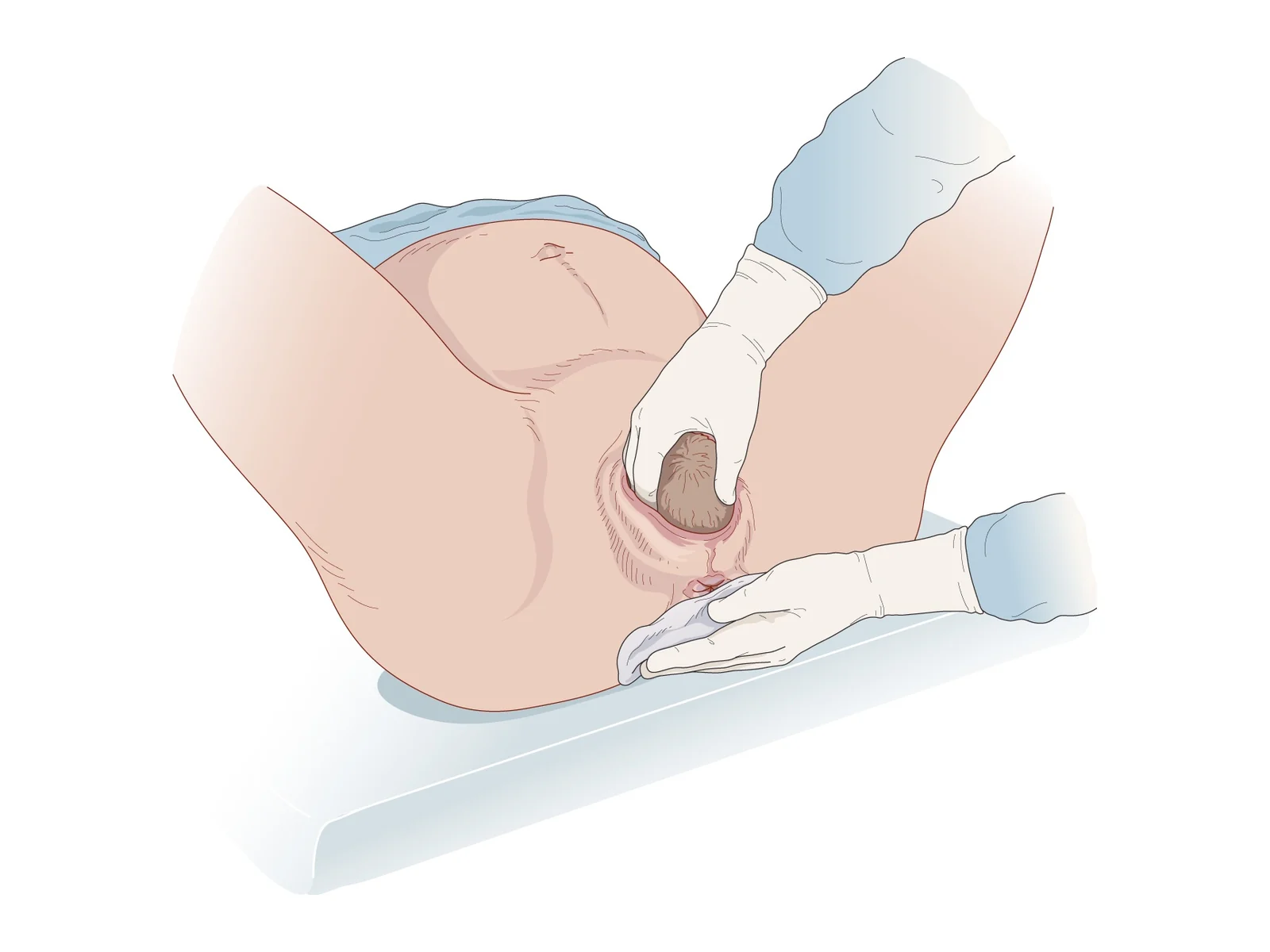
- Perineal massage in the last weeks of pregnancy: the CNGOF recommends encouraging it for women who wish to do it. A midwife can show you how.
- During the pushing stage: manual control of the baby’s head as it emerges and support of the perineum by the midwife or obstetrician are recommended.
- Expressing your wishes: you can say, during antenatal care or in the delivery room, that you would like to avoid an episiotomy. The team will explain in what circumstances it might still be suggested.
After every vaginal birth, the perineum is examined to detect any injury to the anal sphincter, which must be repaired and precisely recorded in your medical file.
Episiotomy or tear: what is the difference?
During a vaginal birth, the perineum can tear naturally. Tears are classified into four degrees:
- 1st degree: affects only the skin or the lining of the vagina;
- 2nd degree: affects the perineal muscles, without involving the anal sphincter;
- 3rd degree: affects the anal sphincter;
- 4th degree: affects the sphincter and the lining of the rectum.
First- and second-degree tears are common and usually heal very well, like an episiotomy. Third- and fourth-degree tears, known as obstetric anal sphincter injuries (OASI), are less common but carry a risk of incontinence of wind or stools: they need careful repair and specific follow-up.
In terms of depth, an episiotomy is equivalent to a second-degree tear. It does not replace a superficial tear that might never have happened: that is why it is no longer done "just in case". Factors that increase the risk of severe injury include a first birth, an assisted delivery and a heavy baby.
How is an episiotomy repaired and how long does it take to heal?
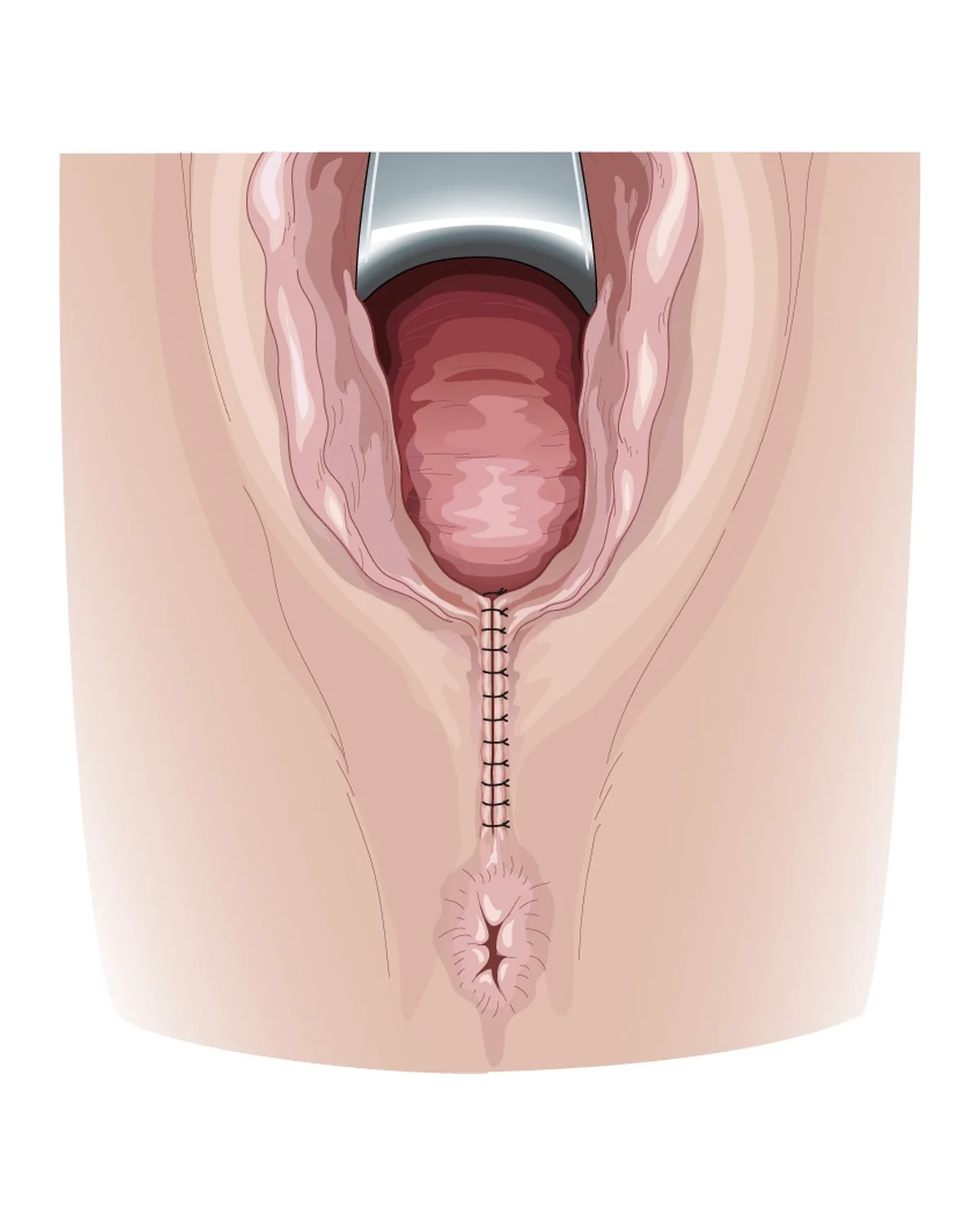
After the baby is born and the placenta is delivered, the cut is stitched layer by layer (vaginal lining, muscles, skin), under anaesthesia, with dissolvable stitches that do not need to be removed.
- First few days: pain when sitting and walking, relieved by painkillers that are safe while breastfeeding and by ice. A cushion can help.
- Hygiene: wash with plain water or a mild soap after each trip to the toilet, and pat dry.
- Bowels: avoid constipation (fluids, fibre, a mild laxative if needed).
- Healing: it usually takes a few weeks.
- Sex: resume when you feel ready; a lubricant is useful, especially while breastfeeding.
What complications can occur, and do I need pelvic floor therapy?
| Complication | Signs | What to do |
|---|---|---|
| Haematoma | Severe, increasing pain, a feeling of pressure | Prompt consultation, sometimes further surgery |
| Infection or wound breakdown | Redness, discharge, fever, stitches coming apart | Consultation, local care, sometimes antibiotics |
| Persistent pain | Discomfort when sitting or on touch, lasting beyond a few weeks | Examination of the scar, local treatment |
| Pain during sex | Burning or pain on penetration | Consultation: local care, pelvic floor therapy, sometimes scar revision |
| Granuloma, scar endometriosis (rare) | A small tender lump, sometimes painful during periods | Examination, appropriate treatment |
According to the Cochrane review, selective and routine episiotomy do not clearly differ in long-term pain during sex or urinary incontinence. For persistent problems, see also pain during sex and urinary or anal leakage after childbirth.
Do I need pelvic floor rehabilitation?
The CNGOF does not recommend routine pelvic floor rehabilitation for women with no symptoms. However, pelvic floor muscle training is recommended for urinary leakage that persists 3 months after the birth, and for anal incontinence. The postnatal check-up, booked via Doctolib or by calling 01 43 79 59 79, is the time to discuss it.
When should I see a doctor quickly after an episiotomy?
Contact your midwife, the maternity unit or your gynaecologist without delay if you have:
- perineal pain that gets worse instead of better;
- a fever above 38 °C;
- a red, swollen scar that oozes or opens;
- foul-smelling discharge;
- inability to control stools or wind.
If you have heavy bleeding or feel faint, go to the maternity emergency department or call 15 or 112 in France, or your local emergency number. See also fever after childbirth.
Would you like a medical opinion?Appointments in Paris 16th or 5th, or by video consultation.
Book an appointmentFrequently asked questions
Can I refuse an episiotomy?
Yes. The procedure must be explained to you and your consent obtained. Express your wishes during pregnancy and when you arrive in the delivery room; the team will tell you in which situations it might be helpful.
Is an episiotomy better than a natural tear?
No, not in general. Studies show that routine episiotomy does not protect against severe tears. Most tears are superficial and heal well.
Do episiotomy stitches need to be removed?
Usually not. The stitches used are dissolvable and disappear on their own within a few weeks.
Does an episiotomy mean I need a caesarean next time?
No. A previous episiotomy is not a reason for a caesarean. The mode of birth is discussed case by case, especially after an anal sphincter injury.
How long does an episiotomy take to heal?
Healing usually takes a few weeks, and the pain eases considerably over the first few days. As a general guide, sex can be resumed once the bleeding has stopped and the scar is no longer painful, often 4 to 6 weeks after the birth; a lubricant helps, especially while breastfeeding. Strenuous sport is usually resumed at around 6 to 8 weeks, once your perineum has been checked at your postnatal appointment.
References
- Ducarme G, et al. Prévention et protection périnéale en obstétrique : recommandations pour la pratique clinique du CNGOF (version courte) [Perineal prevention and protection in obstetrics: CNGOF clinical practice guidelines (short version)]. Gynecol Obstet Fertil Senol, 2018. doi:10.1016/j.gofs.2018.10.032 — PMID 30391283
- Jiang H, et al. Selective versus routine use of episiotomy for vaginal birth. Cochrane Database Syst Rev, 2017. doi:10.1002/14651858.CD000081.pub3 — PMID 28176333
- Sénat MV, et al. Postpartum practice: guidelines for clinical practice from the French College of Gynaecologists and Obstetricians (CNGOF). Eur J Obstet Gynecol Reprod Biol, 2016. doi:10.1016/j.ejogrb.2016.04.032 — PMID 27155443

Dr Olivier KadochObstetrician-gynaecologist and gynaecological surgeon in Paris, seeing patients in Paris 16th and at the Centre de la Femme Paris 5. Former chef de clinique-assistant (senior registrar) at the Paris public hospitals (AP-HP); individually accredited by the French National Authority for Health (HAS). RPPS 10003957809. Background and practice locations
A question about your situation?Appointments at the practice or by video consultation, usually within one week to 10 days.
Book an appointmentGeneral information article: it does not replace a medical consultation. In an emergency, call 15 or 112 in France, or your local emergency number.