Urodynamic testing: procedure, preparation and aftercare
In brief
Urodynamic testing (a urodynamic study) measures how the bladder and the urethral sphincter work: how the bladder fills, holds urine and empties. It is used for urinary leakage, urgency or difficulty passing urine, especially before surgery or when symptoms are complex. The test is done without anaesthesia, is not usually painful, and you can return to your activities straight away.
What is urodynamic testing for?
Urinary problems have many causes, which are not treated in the same way. Urodynamic testing records the pressures in the bladder and urethra while the bladder fills and then empties, to understand the mechanism involved:
- stress urinary incontinence: leaking when coughing, laughing or exercising;
- overactive bladder: involuntary bladder contractions with urgency and sometimes leakage;
- weakness of the urethral sphincter;
- voiding problems: weak stream, bladder that does not empty properly.
This information points to the right treatment: pelvic floor rehabilitation, medication or surgery (see Gynaecological surgery and our article on surgery for stress urinary incontinence).
When do I need urodynamic testing?
Urodynamic testing is not routine. It is particularly useful:
- for mixed symptoms (leaking on exertion and urgency), to work out the share of each;
- for difficulty emptying the bladder or unexplained recurrent urinary tract infections;
- after failure of a first treatment or a first operation;
- before surgery when the picture is complex, or with pelvic organ prolapse together with urinary symptoms;
- with a neurological condition that may affect the bladder.
On the other hand, for simple stress urinary incontinence clearly shown on examination, a large randomised trial published in the New England Journal of Medicine found that clinical assessment alone was not inferior, for the result of surgery at one year, to assessment with urodynamic testing. Likewise, French guidelines on prolapse state that the test is not needed when there are no urinary symptoms. Your doctor therefore suggests it when it can genuinely change the decision.
How do I prepare for urodynamic testing?
- Arrive with a normal urge to pass urine: neither an empty bladder nor an overfull one. The first step is precisely to pass urine into a measuring device.
- No fasting: you can eat and drink normally.
- Your medication: some bladder treatments (anticholinergics and similar drugs) can affect the results. The doctor will tell you whether to stop them and how long before. Do not stop them on your own.
- Urinary infection: mention any recent burning or frequent urges; a urine test (urine culture) may be requested beforehand, and the test is postponed if there is an infection.
- Bring a list of your medication, your previous tests (urodynamic studies, scans) and, if asked, a bladder diary covering a few days (times and volumes of urination, leaks).
- Practical arrangements: the location, appointment waiting time, fees and reimbursement are explained to you at the consultation.
What happens during urodynamic testing, step by step?
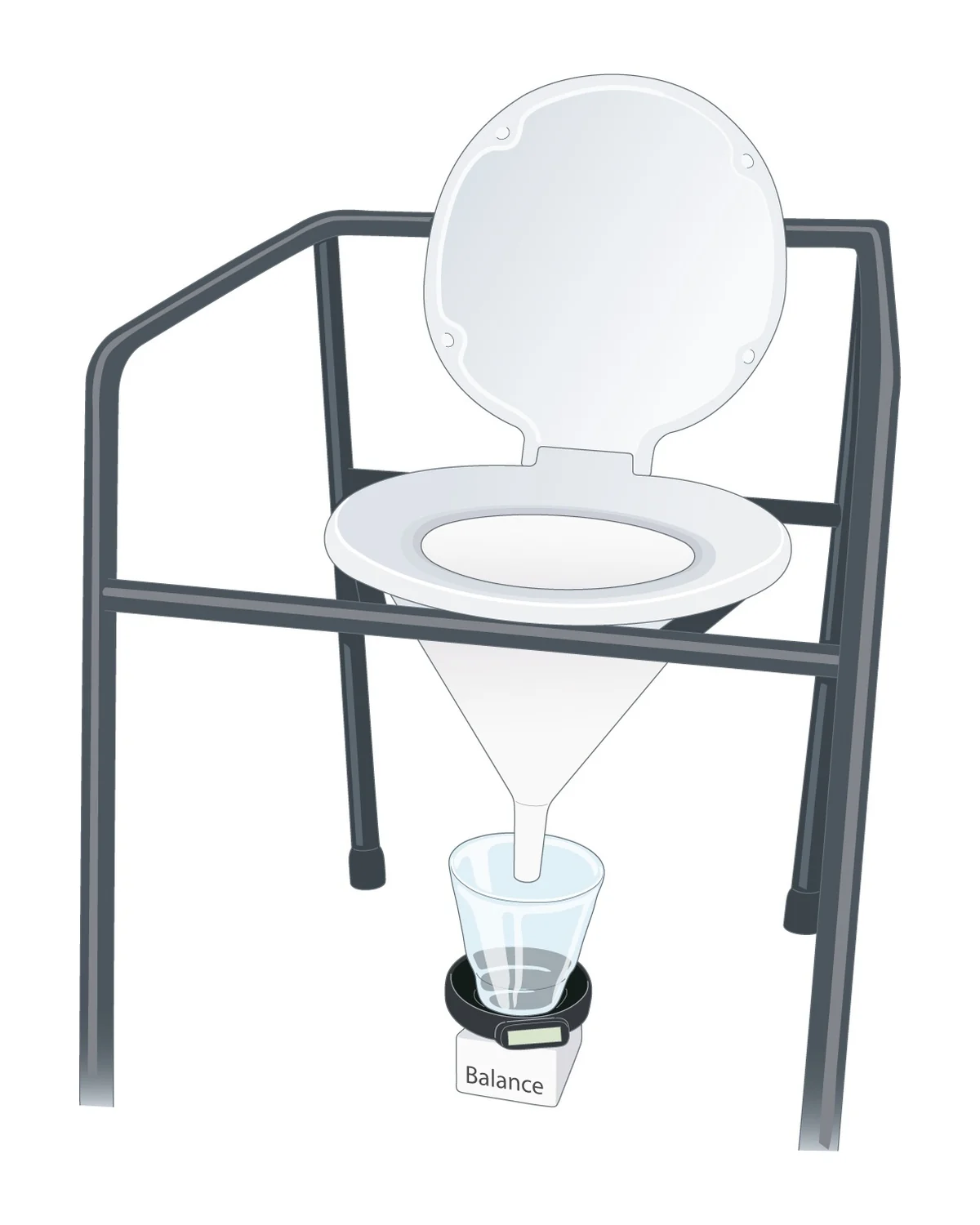
The test follows a standardised protocol. It is done without anaesthesia and without a hospital stay.
| Step | What is done | What is measured |
|---|---|---|
| Interview and clinical examination | Questions about your symptoms and history, examination of the pelvic floor, checking for leaks when you cough | Type of leakage, associated prolapse, pelvic floor tone |
| Uroflowmetry | You pass urine into a recording device, sitting down and in private | Flow rate, strength of stream, duration, volume; then the volume left in the bladder (residual), by ultrasound or catheter |
| Cystometry | The bladder is slowly filled with saline through a thin catheter; you report what you feel | Sensation, bladder capacity, involuntary contractions, leaks on exertion |
| Urethral pressure profile | The catheter is gradually withdrawn along the urethra | Urethral closure pressure, which reflects the strength of the sphincter |
One or two very thin catheters are passed into the bladder through the urethra, and a small catheter in the rectum to measure abdominal pressure, which is needed to interpret bladder pressures. The equipment is sterile and single-use. Inserting the catheters can be a little unpleasant but is usually not painful. You will be asked to cough or bear down several times. Allow time for the interview, setting up and the measurements.
What can urodynamic test results show?
The doctor analyses the traces during and after the test. They may identify:
- stress urinary incontinence, with or without sphincter weakness;
- detrusor overactivity (overactivity of the bladder muscle), causing urgency;
- a bladder with reduced sensation or large capacity;
- a voiding problem, due to a weak bladder or an obstruction.
You are given a report, which is also sent to the doctor who looks after you. The test alone does not decide the treatment: it is interpreted together with your symptoms, their impact on your daily life and your expectations.
What treatments are offered depending on the results?
The test helps choose the treatment suited to the mechanism identified:
| Mechanism identified | Treatments usually discussed |
|---|---|
| Stress urinary incontinence due to urethral mobility | Pelvic floor rehabilitation first; a mid-urethral sling (tape) if symptoms persist |
| Sphincter weakness | Rehabilitation; specific surgical techniques discussed case by case |
| Overactive bladder | Advice on fluids and bladder habits, rehabilitation, medication; other specialist treatments if these fail |
| Mixed incontinence | Treating the most troublesome component first, with an explanation of what each option can achieve |
| Voiding problem | Looking for an obstruction (prolapse, previous surgery), sometimes learning self-catheterisation |
These options are presented at an appointment with their benefits, limits and risks, so that the decision is shared.
What should I expect after urodynamic testing?
- You return to your activities straight away.
- Mild discomfort or slight burning when passing urine for a few hours is common and temporary.
- You are advised to drink plenty in the following days.
- Antibiotics: the available evidence does not support routine antibiotics. A 2020 systematic review shows that preventive antibiotics reduce bacteria in the urine, with no proof of fewer actual infections. They may be prescribed case by case, depending on your risk factors.
When should I see a doctor after urodynamic testing?
Urinary tract infection is the most common complication. Contact your doctor if you have:
- burning when passing urine that lasts beyond 24 to 48 hours, or very frequent urges;
- fever, chills or pain in the lower back on one side, which may suggest a kidney infection;
- a lot of blood in the urine;
- inability to pass urine.
If you have a high fever and feel unwell, call 15 or 112 in France, or your local emergency number. To find out more: urinary tract infection in women.
Frequently asked questions
Is urodynamic testing painful?
As a rule, no. Inserting the thin catheters can be unpleasant for a few seconds, and filling the bladder gives a feeling of needing to pass urine, but the test does not usually hurt.
Can I have urodynamic testing during my period?
It is possible in most cases, but some women prefer to postpone it for comfort. Mention it when you book.
Do I need someone with me or time off work?
No. The test is done without anaesthesia: you can go home on your own and return to work the same day.
Is urodynamic testing required before a mid-urethral sling?
Not always. For simple, clearly demonstrated stress incontinence, it does not improve surgical results. It is useful when symptoms are mixed or atypical, or after a failed treatment.
References
- Nager CW, et al. A randomized trial of urodynamic testing before stress-incontinence surgery. N Engl J Med, 2012. doi:10.1056/NEJMoa1113595 — PMID 22551104
- Benseler A, et al. Antibiotic prophylaxis for urodynamic testing in women: a systematic review. Int Urogynecol J, 2021. doi:10.1007/s00192-020-04501-3 — PMID 32845398
- Le Normand L, et al. [Clinical practice guidelines: Synthesis of the guidelines for the surgical treatment of primary pelvic organ prolapse in women by the AFU, CNGOF, SIFUD-PP, SNFCP, and SCGP]. J Gynecol Obstet Biol Reprod (Paris), 2016. doi:10.1016/j.jgyn.2016.09.020 — PMID 27776848

Dr Olivier KadochObstetrician-gynaecologist and gynaecological surgeon in Paris (16th and 5th arrondissements). Former chef de clinique-assistant (senior registrar) at the Paris public hospitals (AP-HP); individually accredited by the French National Authority for Health (HAS). RPPS 10003957809. Background and practice locations
A question about your situation?Appointments at the practice or by video consultation, usually within one week to 10 days.
Book an appointmentGeneral information article: it does not replace a medical consultation. In an emergency, call 15 or 112 in France, or your local emergency number.