Hysterectomy or conservative treatment: what are the options?
In brief
There are alternatives to hysterectomy (removal of the uterus) for most benign conditions of the uterus: medication, levonorgestrel IUD, hysteroscopic resection, endometrial ablation, myomectomy, embolisation. French guidelines require every patient to be informed of the benefits and risks of all these options; hysterectomy remains the only treatment that permanently stops bleeding and eliminates the risk of fibroid recurrence. When it is chosen, the vaginal or laparoscopic route is preferred to opening the abdomen: according to a Cochrane review of 63 trials (6,811 women), return to normal activities is faster by about 11 to 13 days.
Why ask the question?
Hysterectomy remains a common operation for benign conditions: fibroids, adenomyosis, very heavy periods with no identified cause. It is major, irreversible surgery that ends any possibility of pregnancy.
Advances in medical treatments, hysteroscopy and interventional radiology often make it possible to relieve symptoms while preserving the uterus. The choice depends on the cause of the symptoms, age, plans for pregnancy and what the patient wishes to prioritise: definitive effectiveness, quick recovery, preservation of the uterus.
Which situations are concerned?
The three main benign causes that lead to a hysterectomy being considered are:
- symptomatic uterine fibroids (bleeding, compression, pain);
- adenomyosis, infiltration of the endometrium into the uterine muscle, causing heavy and painful periods;
- heavy uterine bleeding with no identified lesion (described as "functional" or idiopathic).
The 2022 guidelines of the CNGOF (French College of Gynaecologists and Obstetricians) on the management of abnormal uterine bleeding deal with each of these situations separately, as well as with endometrial polyps and hyperplasia. A thorough assessment (ultrasound, sometimes hysteroscopy or MRI, endometrial biopsy depending on age) is essential before any decision, because the choice of treatment depends on the cause.
What are the alternatives to hysterectomy?
| Option | Principle | Main indications | Fertility preserved | Limitations |
|---|---|---|---|---|
| Medical treatment (tranexamic acid, progestogens, relugolix combination, GnRH agonists) | Reduces bleeding | Fibroids, adenomyosis, functional bleeding | Yes (once stopped) | Effect lasts only while taken; side effects depending on the drug |
| Levonorgestrel IUD | Hormone released inside the uterus, thins the endometrium | Functional bleeding, adenomyosis, small fibroids not distorting the cavity | Yes (once removed) | Irregular bleeding in the first months; risk of expulsion if the cavity is distorted |
| Hysteroscopic resection | Removal of a submucosal fibroid or a polyp through the natural passages | FIGO 0 to 2 fibroids, polyps | Yes | Sometimes requires 2 stages; recurrence possible |
| Endometrial ablation (destruction) | Destruction of the lining of the uterus by hysteroscopy or with a dedicated device | Heavy bleeding, women with no plans for pregnancy | No: subsequent pregnancy contraindicated | Less effective with a large uterus or extensive adenomyosis; recurrence possible |
| Myomectomy | Surgical removal of fibroids | Symptomatic fibroids, wish to preserve the uterus | Yes | Bleeding during surgery; recurrence possible; uterine scar |
| Uterine artery embolisation | Blocking of the fibroid arteries by a radiological procedure | Symptomatic fibroids, women with no plans for pregnancy | Uncertain | Initial pain; repeat procedures more frequent than after surgery |
| Hysterectomy | Removal of the uterus | Failure or refusal of alternatives, severe symptoms, no wish for pregnancy | No | Major, irreversible surgery |
Which option for which cause?
Fibroids
- Submucosal fibroid (FIGO 0 to 2): hysteroscopic resection is the first-line treatment, whatever the age.
- Symptomatic intramural or subserosal fibroids: medical treatment first, then myomectomy or embolisation if necessary.
- In women approaching the menopause: the 2012 French guidelines state that, after information about the alternatives and risks, hysterectomy is the most effective treatment for symptomatic fibroids, with a high satisfaction rate. But the approaching menopause, which causes fibroids to shrink, may also justify medical treatment while waiting.
Adenomyosis
The levonorgestrel IUD and hormonal treatments are offered first. Endometrial ablation is less effective when the adenomyosis is deep. Hysterectomy remains the definitive treatment when symptoms persist and there are no further plans for pregnancy.
Heavy bleeding with no identified cause
Medical treatments and the levonorgestrel IUD are offered first. Endometrial ablation is a minimally invasive alternative for women who no longer wish to become pregnant. Hysterectomy is only considered if these fail.
When is hysterectomy the most suitable option?
Hysterectomy may be the most suitable solution when:
- conservative treatments have failed or are not tolerated;
- the fibroids are very numerous or very large, making myomectomy risky;
- fibroids and severe adenomyosis coexist;
- the patient, with no plans for pregnancy, wants a definitive solution and does not want to risk a repeat procedure;
- there is doubt about the benign nature of a lesion.
It is a personal decision, made after full information about the alternatives. No option is imposed.
If a hysterectomy is decided on, which surgical approach?
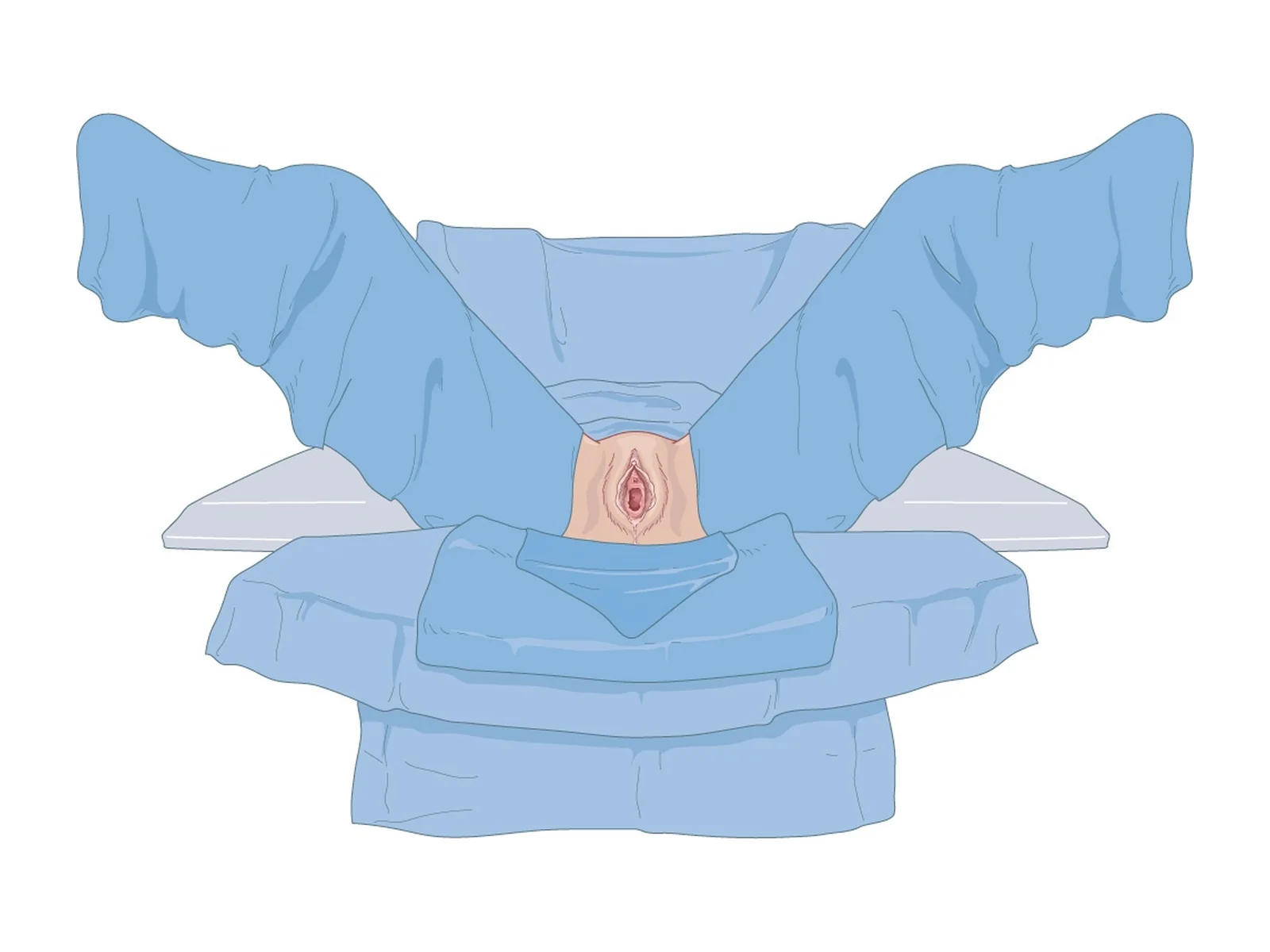
The Cochrane review by Pickett et al. (2023, 63 trials, 6,811 women) compared the different surgical approaches to hysterectomy for benign disease:
| Approach | Main findings |
|---|---|
| Vaginal | Faster return to normal activities than with the abdominal approach (about 11 days sooner), shorter hospital stay, fewer wound infections |
| Laparoscopic | Faster return than with the abdominal approach (about 13 days sooner), shorter hospital stay, fewer transfusions; slightly more ureteric injuries |
| Abdominal (laparotomy) | Reserved for very large uteruses or situations where the other approaches are not possible |
The authors conclude that the vaginal approach should be preferred when technically possible, and laparoscopy when the vaginal approach is not. French guidelines take the same view for fibroids with a typical appearance on imaging.
A subtotal hysterectomy (preserving the cervix) is an alternative to total hysterectomy in the treatment of fibroids; cervical cancer screening must then be continued.
As a guide, the hospital stay is generally: 2 to 4 days for the vaginal or laparoscopic approach, 3 to 6 days for laparotomy. Sick leave: generally about 1 month, tailored at the consultation.
What happens to the ovaries?
Hysterectomy for a benign condition does not necessarily involve removing the ovaries. Before the menopause, preserving them maintains natural hormone production and avoids an abrupt menopause. Removal of the fallopian tubes (salpingectomy) may be offered at the same time; this question, like that of the ovaries, is discussed before the operation (see hysterectomy: indications and procedure).
When should you seek urgent care?
Whether you are on conservative treatment or waiting for an operation, seek medical advice promptly or call 15 (SAMU) or 112 in France, or your local emergency number, in the event of:
- very heavy bleeding (a pad or tampon soaked in less than an hour, for several hours in a row);
- fainting, breathlessness, palpitations, possible signs of severe anaemia;
- sudden, intense pelvic pain;
- fever after an operation or an embolisation.
Frequently asked questions
Does a hysterectomy cause the menopause?
No, if the ovaries are preserved. Periods stop, but the ovaries continue to produce hormones until the natural age of menopause.
Is endometrial ablation a form of contraception?
No. Pregnancy remains possible, though rare, and would be high-risk. Contraception is still needed until the menopause.
Can the hormonal IUD avoid a hysterectomy?
In many cases of heavy bleeding or adenomyosis, it controls symptoms well enough to avoid surgery. It is less suitable when a fibroid distorts the uterine cavity.
Does hysterectomy change your sex life?
In most women, sexuality is preserved, or even improved when pain and bleeding disappear. Any concerns about this deserve to be discussed during the consultation.
Can I ask for a second opinion before a hysterectomy?
Yes, this is legitimate for any non-urgent, irreversible procedure. Simply bring your imaging and consultation reports.
How long is the hospital stay and time off work after a hysterectomy?
As a guide: by laparoscopy or the vaginal route, generally 2 to 4 days in hospital and about 1 month off work, with no heavy lifting for 6 weeks; by laparotomy, 3 to 6 days and 4 to 8 weeks off work. Sex can generally resume after 4 to 8 weeks. These figures are tailored at the consultation; fees are set out in a quote given beforehand.
References
- Pickett CM, et al. Surgical approach to hysterectomy for benign gynaecological disease. Cochrane Database Syst Rev, 2023. doi:10.1002/14651858.CD003677.pub6 — PMID 37642285
- Brun JL, et al. [Management of women with abnormal uterine bleeding: Clinical practice guidelines of the French National College of Gynecologists and Obstetricians (CNGOF)]. Gynecol Obstet Fertil Senol, 2022. doi:10.1016/j.gofs.2022.02.078 — PMID 35248756
- Marret H, et al. Therapeutic management of uterine fibroid tumors: updated French guidelines. Eur J Obstet Gynecol Reprod Biol, 2012. doi:10.1016/j.ejogrb.2012.07.030 — PMID 22939241

Dr Olivier KadochObstetrician-gynaecologist and gynaecological surgeon in Paris (16th and 5th arrondissements). Former chef de clinique-assistant (senior registrar) at the Paris public hospitals (AP-HP); individually accredited by the French National Authority for Health (HAS). RPPS 10003957809. Background and practice locations
A question about your situation?Appointments at the practice or by video consultation, usually within one week to 10 days.
Book an appointmentGeneral information article: it does not replace a medical consultation. In an emergency, call 15 or 112 in France, or your local emergency number.