Vaginal birth after a caesarean (VBAC)
In brief
Giving birth after a caesarean by the vaginal route (VBAC, vaginal birth after caesarean, with a scarred uterus) is possible in most cases: the attempt results in a vaginal delivery for about 7 women in 10. According to the guidelines of the CNGOF (French College of Gynaecologists and Obstetricians), the benefit/risk balance favours a trial of vaginal birth in most situations, even though the risk of uterine rupture is higher than with a planned caesarean: it was 0.7% in a large American study of nearly 18,000 women. The choice of mode of delivery is shared between the patient and her doctor, by the 8th month of pregnancy at the latest.
Does one caesarean mean a caesarean for all subsequent births?
No. The French CNGOF guidelines on birth after a previous caesarean (scarred uterus) state that a trial of vaginal birth is the preferred option for women who do not have several risk factors for failure or uterine rupture.
Two options are available in the next pregnancy:
- a trial of vaginal birth (known as VBAC, "vaginal birth after caesarean", or TOLAC, "trial of labour after caesarean");
- a planned caesarean, performed before labour starts.
Neither is risk-free. A Cochrane review found that the comparison between these two strategies relies almost entirely on observational studies, in the absence of a sufficiently large randomised trial: information must therefore be tailored to each woman.
What are the chances of success?
In the large prospective American study by Landon and colleagues (19 university centres), about 73% of women who attempted a vaginal birth after a caesarean delivered vaginally.
The chances of success are higher when:
- the woman has already given birth vaginally, before or after her caesarean;
- labour starts spontaneously;
- the cervix is favourable for labour (favourable Bishop score);
- the previous caesarean was done for a reason that will not necessarily recur (breech baby, abnormal foetal heart rate).
They are lower when the previous caesarean was for failure of the cervix to dilate, and in the presence of obesity, a high estimated foetal weight, older maternal age or induction of labour.
What are the risks of a trial of vaginal birth?

Uterine rupture
This is the main risk: the scar on the uterus may open during labour. This complication is rare but serious, for both mother and baby. In the Landon study, symptomatic uterine rupture occurred in 0.7% of women attempting a vaginal birth. The CNGOF reports that the risk increases when labour is induced: around 1% with oxytocin and 2% with vaginal prostaglandins.
Other risks
According to the CNGOF, serious maternal complications are rare and broadly comparable between a trial of vaginal birth and a planned caesarean. Maternal morbidity is, however, higher when the trial fails and ends in a caesarean during labour. Risks for the newborn remain low in absolute terms, but slightly higher than with a planned caesarean.
And the risks of a planned caesarean?
A planned caesarean carries other risks: surgical complications, transient breathing difficulties in the newborn (hence the recommendation not to schedule it before 39 weeks of pregnancy, except in particular situations), and above all, in the long term, morbidity that increases with the number of caesareans (abnormally implanted placenta, adhesions, complications in subsequent pregnancies). Conversely, each successful vaginal birth reduces the risks of the next trial.
| Trial of vaginal birth | Planned caesarean | |
|---|---|---|
| Uterine rupture | Rare (0.7% in the Landon study), more frequent when labour is induced | Exceptional |
| Recovery after the birth | Usually quicker if successful | That of a surgical operation |
| Risk if it fails | Caesarean during labour, with more complications than a planned caesarean | — |
| Future pregnancies | Lower risks after a successful VBAC | Risks increasing with the number of caesareans |
| Newborn breathing | Less transient breathing difficulty | Transient breathing difficulty more frequent if performed too early |
When is a vaginal birth not advised?
According to the CNGOF, a planned caesarean is recommended:
- if there is a scar on the body of the uterus (high vertical incision, known as classical or corporeal);
- after three or more caesareans;
- when the baby has an estimated weight above 4,500 g, particularly without a previous vaginal birth;
- in the case of very severe obesity (BMI above 50).
The usual contraindications to vaginal birth also apply, such as a placenta covering the cervix (placenta praevia).
On the other hand, the CNGOF considers that a trial of vaginal birth remains possible, if obstetric conditions are favourable, in several situations long regarded as unfavourable: two previous caesareans, a scar of unknown type, previous myomectomy, uterine malformation, an interval of less than six months between the caesarean and the next pregnancy, or a previous caesarean performed before 37 weeks.
The guidelines also state that ultrasound measurement of the scar and radiopelvimetry are not useful in deciding on the mode of delivery.
Can labour be induced after a caesarean?
Yes, but only for a medical reason, according to the CNGOF. Induction increases the risk of uterine rupture and reduces the chances of success. The choice of method takes these risks into account:
- oxytocin may be used, with an estimated risk of rupture of about 1%;
- vaginal prostaglandins carry a risk of about 2%;
- misoprostol is not advised on a scarred uterus;
- mechanical methods (balloon) have been less studied.
As with the choice between a trial of vaginal birth and a planned caesarean, the available data come from observational studies: the choice is based on an individual discussion.
How does the birth go?
The birth proceeds as a vaginal birth, with a few specific features:
- arrival at the maternity unit as soon as labour starts or if the waters break;
- continuous monitoring of the baby’s heart rate;
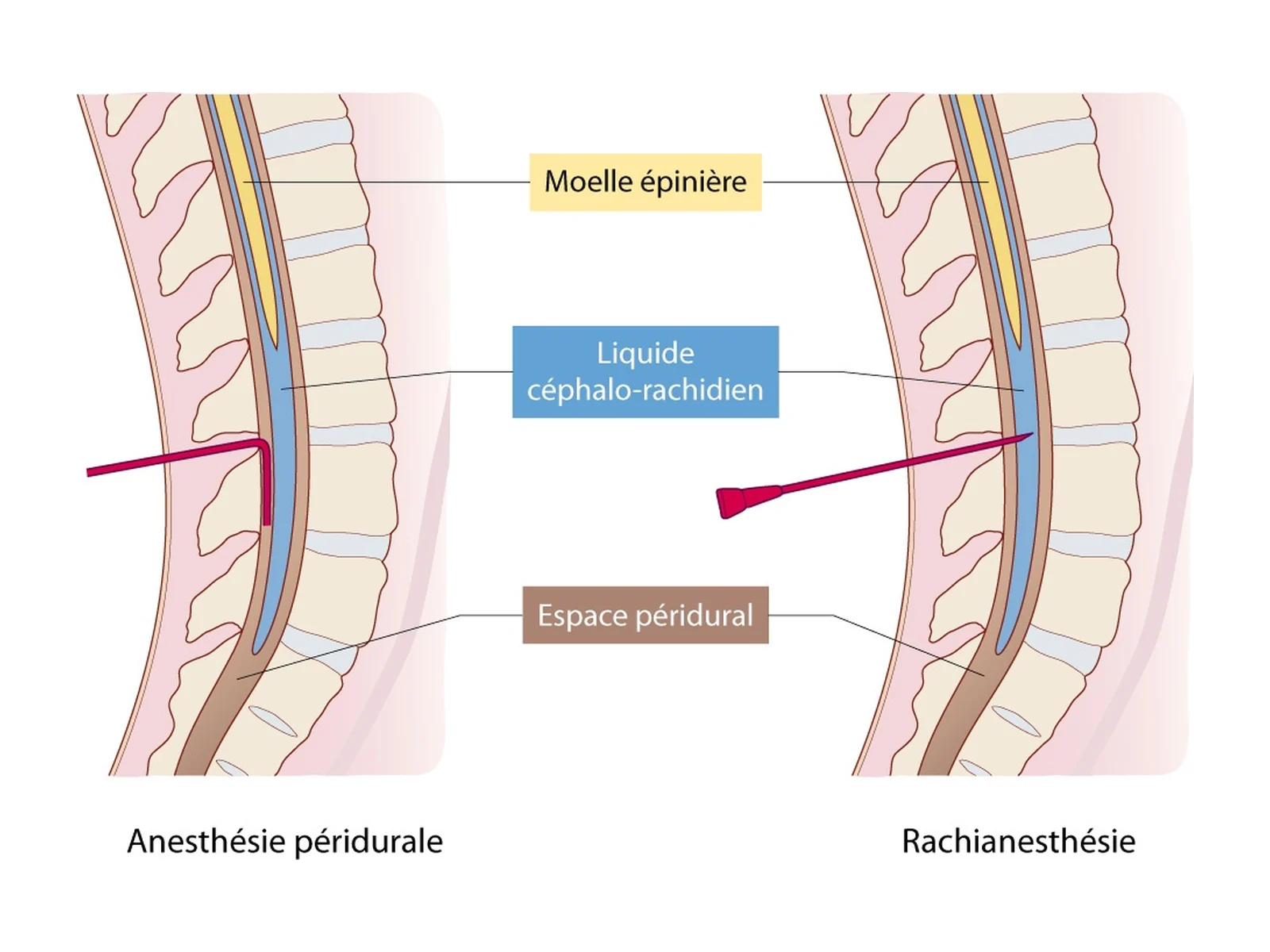
- epidural encouraged by the guidelines, which also makes a caesarean easier if it becomes necessary;
- cautious use of oxytocin, as the risk of rupture increases with the dose;
- if labour stops progressing during the active phase, the CNGOF recommends not waiting more than three hours before deciding on a caesarean.
The on-site presence of an obstetrician and an anaesthetist should be explained to the patient: it is a safety condition for a trial of vaginal birth.
At the Maternité Sainte-Félicité, on-site obstetric cover is provided; at the Clinique Sainte-Thérèse, an obstetrician is on call.
How is the mode of birth after a caesarean chosen?
The CNGOF recommends that the decision be shared between the woman and her doctor, and made during the 8th month at the latest, taking into account:
- the operative report of the previous caesarean (type of incision, course of the operation, reason for the caesarean);
- obstetric history and the course of the current pregnancy;
- risk factors for failure and uterine rupture;
- the patient’s wishes.
If, after full information and time to think, a woman prefers a repeat caesarean, her choice must be respected.
It is useful to obtain the operative report of the previous caesarean early in the pregnancy.
The decision on the mode of delivery is made with you at a dedicated consultation during your pregnancy care.
When should you seek urgent care?
During pregnancy, and all the more so during a trial of vaginal birth, go to the maternity unit without delay, or call 15 (SAMU) or 112 in France, or your local emergency number, in the event of:
- severe, continuous abdominal pain, particularly at the scar;
- vaginal bleeding;
- reduced baby movements;
- feeling faint or intensely weak.
Would you like a medical opinion?Appointments in Paris 16th or 5th, or by video consultation.
Book an appointmentFrequently asked questions
How long should you wait between a caesarean and a new pregnancy?
The CNGOF considers that a trial of vaginal birth remains possible even if the pregnancy began less than six months after the caesarean, when obstetric conditions are favourable.
Can you try for a vaginal birth after two caesareans?
Yes, according to the CNGOF this is possible if conditions are favourable, after an individual discussion of the risks. After three or more caesareans, a planned caesarean is recommended.
Can an ultrasound check the strength of the scar?
No. French guidelines state that ultrasound measurement of the scar has not been shown to be useful in deciding on the mode of delivery.
Does an epidural mask a uterine rupture?
On the contrary, it is encouraged by the guidelines. Rupture most often shows up as abnormalities in the baby’s heart rate, which continuous monitoring can detect.
Is a manual exploration of the uterus needed after the birth?
No, not routinely. The CNGOF specifies that the presence of a scar alone does not justify routine manual exploration of the uterus after a vaginal birth.
References
- Sentilhes L, et al. Delivery for women with a previous cesarean: guidelines for clinical practice from the French College of Gynecologists and Obstetricians (CNGOF). Eur J Obstet Gynecol Reprod Biol, 2013. doi:10.1016/j.ejogrb.2013.05.015 — PMID 23810846
- Landon MB, et al. Maternal and perinatal outcomes associated with a trial of labor after prior cesarean delivery. N Engl J Med, 2004. doi:10.1056/NEJMoa040405 — PMID 15598960
- Dodd JM, et al. Planned elective repeat caesarean section versus planned vaginal birth for women with a previous caesarean birth. Cochrane Database Syst Rev, 2013. doi:10.1002/14651858.CD004224.pub3 — PMID 24323886

Dr Olivier KadochObstetrician-gynaecologist and gynaecological surgeon in Paris, seeing patients in Paris 16th and at the Centre de la Femme Paris 5. Former chef de clinique-assistant (senior registrar) at the Paris public hospitals (AP-HP); individually accredited by the French National Authority for Health (HAS). RPPS 10003957809. Background and practice locations
A question about your situation?Appointments at the practice or by video consultation, usually within one week to 10 days.
Book an appointmentGeneral information article: it does not replace a medical consultation. In an emergency, call 15 or 112 in France, or your local emergency number.