Puberty in girls: normal development and delayed puberty
In brief
In girls, puberty normally begins with breast development (thelarche) between the ages of 8 and 13; the first period usually comes two to three years later. Puberty is considered delayed when the breasts have not started to develop by 13, or when periods have not started by 15. Most often this is simply a constitutional delay, but a medical cause should be looked for.
What happens during normal puberty in girls?
Puberty is the period during which a child's body becomes an adult body capable of reproduction. It is triggered by the brain: the hypothalamus releases a hormone (GnRH) that stimulates the pituitary gland, which in turn secretes LH and FSH. These two hormones activate the ovaries, which produce oestrogens.
The changes follow a fairly consistent order:
- Breast development (thelarche), the first sign, sometimes on one side only at first;
- Pubic hair, then underarm hair;
- A growth spurt in height;
- First period (menarche), usually two to three years after breast development begins.
Body shape also changes: wider hips and a new distribution of fat. The vulva and vagina change, and normal white vaginal discharge often appears a few months before the first period.
At what age should puberty start in girls?
| Situation | Benchmark | What to do |
|---|---|---|
| Early (precocious) puberty | Breasts before age 8 | Prompt paediatric appointment |
| Puberty within the usual range | Breasts start developing between 8 and 13 | Routine monitoring by the child's doctor |
| Delayed puberty | No breast development by 13 | Medical assessment |
| Primary amenorrhoea | No periods by 15, or more than 3 years after breast development began | Medical assessment |
These benchmarks are statistical thresholds. A girl whose puberty begins at 12 is not “late”, even if her friends started before her.
How does a doctor assess pubertal development?
The doctor uses the Tanner scale, which describes five stages for the breasts (B1 to B5) and five for pubic hair (P1 to P5). Stage 1 corresponds to a child's appearance, stage 5 to an adult's.
The doctor also looks at the growth chart in the child health record: growth that slows down or stops is an important warning sign. Weight, blood pressure and general health complete the examination. In a teenage girl, an internal gynaecological examination is generally not needed.
If doubt remains, simple tests are offered:
- X-ray of the hand and wrist to estimate bone age;
- pelvic ultrasound through the abdomen to measure the womb and ovaries;
- blood test: LH, FSH, oestradiol and, depending on the situation, thyroid hormones, prolactin, and tests for coeliac disease or anaemia.
The GnRH stimulation test (LHRH test) is only requested as a second step, by the paediatric endocrinologist.
What causes delayed puberty in girls?
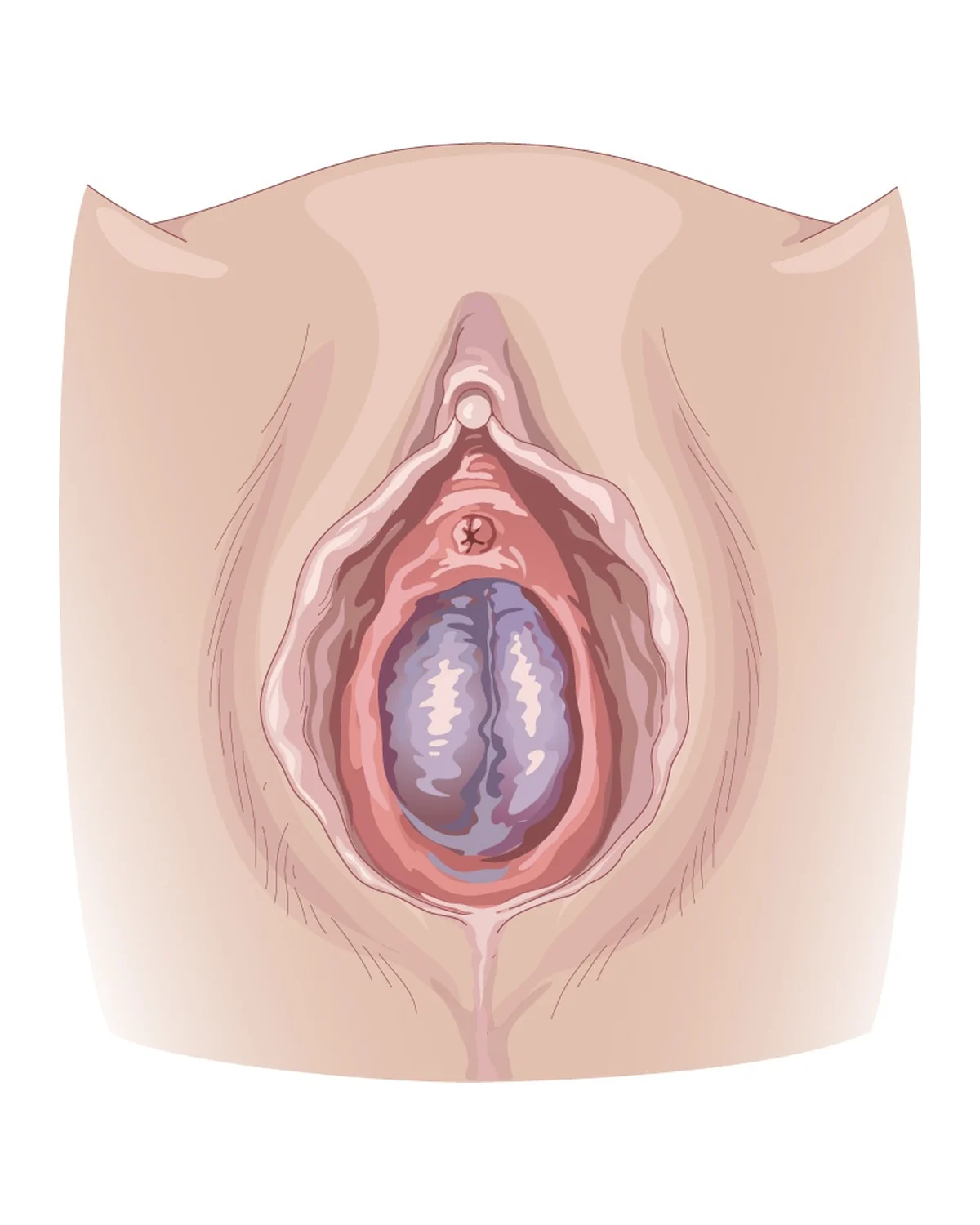
There are three main situations, depending on the levels of FSH and LH in the blood.
Simple (constitutional) delay
This is the most common cause. Puberty starts late but proceeds normally. Bone age is delayed, in step with height and pubertal development. A parent often had the same pattern. Puberty eventually happens on its own.
Delay linked to a general illness or lifestyle
The brain “pauses” puberty when the body is short of energy: anorexia nervosa or another eating disorder, intensive sport with insufficient food intake, chronic illness (Crohn's disease, coeliac disease, kidney failure), an underactive thyroid, excess prolactin. Treating the cause usually allows puberty to resume.
Permanent hormone deficiency
- High FSH and LH: the ovaries are not working. The most widely known cause is Turner syndrome, caused by the complete or partial absence of one X chromosome, diagnosed by a karyotype (chromosome test). Girls with this condition are often short.
- Persistently low FSH and LH: this is hypogonadotropic hypogonadism. It can be congenital, sometimes with a loss of the sense of smell (Kallmann syndrome), or acquired, for example with a tumour near the pituitary gland. A brain MRI is then requested.
Telling a simple delay apart from a congenital LH and FSH deficiency can be difficult at first: monitoring progress over a few months helps to decide.
How is delayed puberty in girls treated?
Treatment depends on the cause and on how the teenager is coping.
- Simple delay: often just monitoring, with reassuring explanations. If the delay is affecting her wellbeing, a short course of low-dose oestrogen may be discussed to kick-start puberty.
- General illness or eating disorder: treatment of the cause, with nutritional and psychological support if needed.
- Permanent hormone deficiency: puberty is induced with oestrogen alone, in very gradually increasing doses, over several months or years. A progestogen is added only later, to bring on periods and protect the womb lining. Treatment then continues into adulthood to protect the bones, the heart and sexual health.
Follow-up is provided by a paediatric endocrinologist, working with the gynaecologist for the transition to adult care and, later, fertility questions.
What about early puberty in girls?
Breast development before age 8, or a rapid growth spurt with signs of puberty, should prompt a medical visit. In girls, central precocious puberty often has no identifiable cause, but a brain MRI is usually done to rule out a lesion. Treatment to slow puberty with a GnRH analogue may be offered.
Isolated breast development in a very young girl, or isolated pubic hair, does not always mean true early puberty: only the doctor can tell the difference.
When should my daughter see a doctor about puberty?
Make an appointment with the paediatrician, GP or gynaecologist if:
- the breasts have not started to develop by 13;
- periods have not started by 15, or 3 years after breast development began;
- growth slows down markedly or stops;
- puberty starts, then stalls;
- signs of puberty appear before age 8;
- headaches, vision problems or loss of smell accompany a delay;
- your daughter is losing weight, eating very little or doing intensive sport without having periods.
Delayed puberty can be hard to live with: feeling different, teasing, isolation. It helps to talk about it with your daughter and to seek psychological support if needed. To understand what comes next, read our article on the menstrual cycle.
Teenagers are seen in consultation at the practice. Appointments can be booked via Doctolib or by calling 01 43 79 59 79; the average waiting time for an appointment is one week to 10 days, except during holiday periods.
Frequently asked questions
At what age do girls get their first period?
It usually comes two to three years after breast development begins. Having no periods by age 15 warrants a medical assessment.
Can intensive sport delay puberty?
Yes, especially if food intake does not cover the energy used. The brain then slows down the production of puberty hormones.
Does delayed puberty cause infertility?
A simple delay has no effect on fertility. With a permanent hormone deficiency, treatments often make pregnancy possible in adulthood, with specialist support.
Are irregular periods normal after the first period?
Yes, cycles are often irregular in the first few years, because ovulation does not yet happen every cycle. Very heavy or very painful periods should, however, prompt a medical visit.
References
- Palmert MR, et al. Clinical practice. Delayed puberty.. N Engl J Med, 2012. doi:10.1056/NEJMcp1109290 — PMID 22296078
- Boehm U, et al. Expert consensus document: European Consensus Statement on congenital hypogonadotropic hypogonadism--pathogenesis, diagnosis and treatment.. Nat Rev Endocrinol, 2015. doi:10.1038/nrendo.2015.112 — PMID 26194704
- Latronico AC, et al. Causes, diagnosis, and treatment of central precocious puberty.. Lancet Diabetes Endocrinol, 2016. doi:10.1016/S2213-8587(15)00380-0 — PMID 26852255

Dr Olivier KadochObstetrician-gynaecologist and gynaecological surgeon in Paris (16th and 5th arrondissements). Former chef de clinique-assistant (senior registrar) at the Paris public hospitals (AP-HP); individually accredited by the French National Authority for Health (HAS). RPPS 10003957809. Background and practice locations
A question about your situation?Appointments at the practice or by video consultation, usually within one week to 10 days.
Book an appointmentGeneral information article: it does not replace a medical consultation. In an emergency, call 15 or 112 in France, or your local emergency number.