The menstrual cycle: understanding periods, ovulation and hormones
In brief
The menstrual cycle runs from the first day of one period to the first day of the next. According to the International Federation of Gynecology and Obstetrics (FIGO), it normally lasts between 24 and 38 days, and rarely exactly 28 days. It is controlled by the brain (FSH and LH) and by the ovaries (oestrogen, then progesterone), and ovulation happens on average about twelve days before the next period. The fertile window is the five days before ovulation plus the day of ovulation.
What is the menstrual cycle?
Every month, from puberty to the menopause, the body prepares for a possible pregnancy: an egg matures and is released by the ovary, and the lining of the womb (the endometrium) thickens to receive an embryo. If there is no pregnancy, this lining is shed: that is your period.
By convention, the cycle starts on the first day of your period (day 1) and ends the day before your next period. Several organs are involved: the hypothalamus and pituitary gland in the brain, the ovaries and the womb. Understanding how it works helps you recognise what is normal and what needs medical advice, whether for a period problem or when planning a pregnancy.
How long is a normal menstrual cycle?
The 28-day cycle is an average, not a rule. FIGO considers the following to be normal:
| Measure | Normal limits (FIGO 2018) |
|---|---|
| Cycle length | 24 to 38 days |
| Regularity | No more than 7 to 9 days' difference between the shortest and longest cycle, depending on age |
| Length of period | 8 days at most |
| Heaviness | No impact on quality of life |
A large study of more than 600,000 cycles recorded in an app found an average length of 29.3 days, with cycles becoming slightly shorter with age between 25 and 45.
What happens in each phase of the menstrual cycle?
The follicular phase: from day 1 to ovulation
At the start of the cycle, the pituitary gland releases FSH (follicle-stimulating hormone). It stimulates a group of follicles, small fluid-filled sacs that each contain an egg. Usually only one follicle, called the dominant follicle, keeps growing until it is mature; the others shrink away.
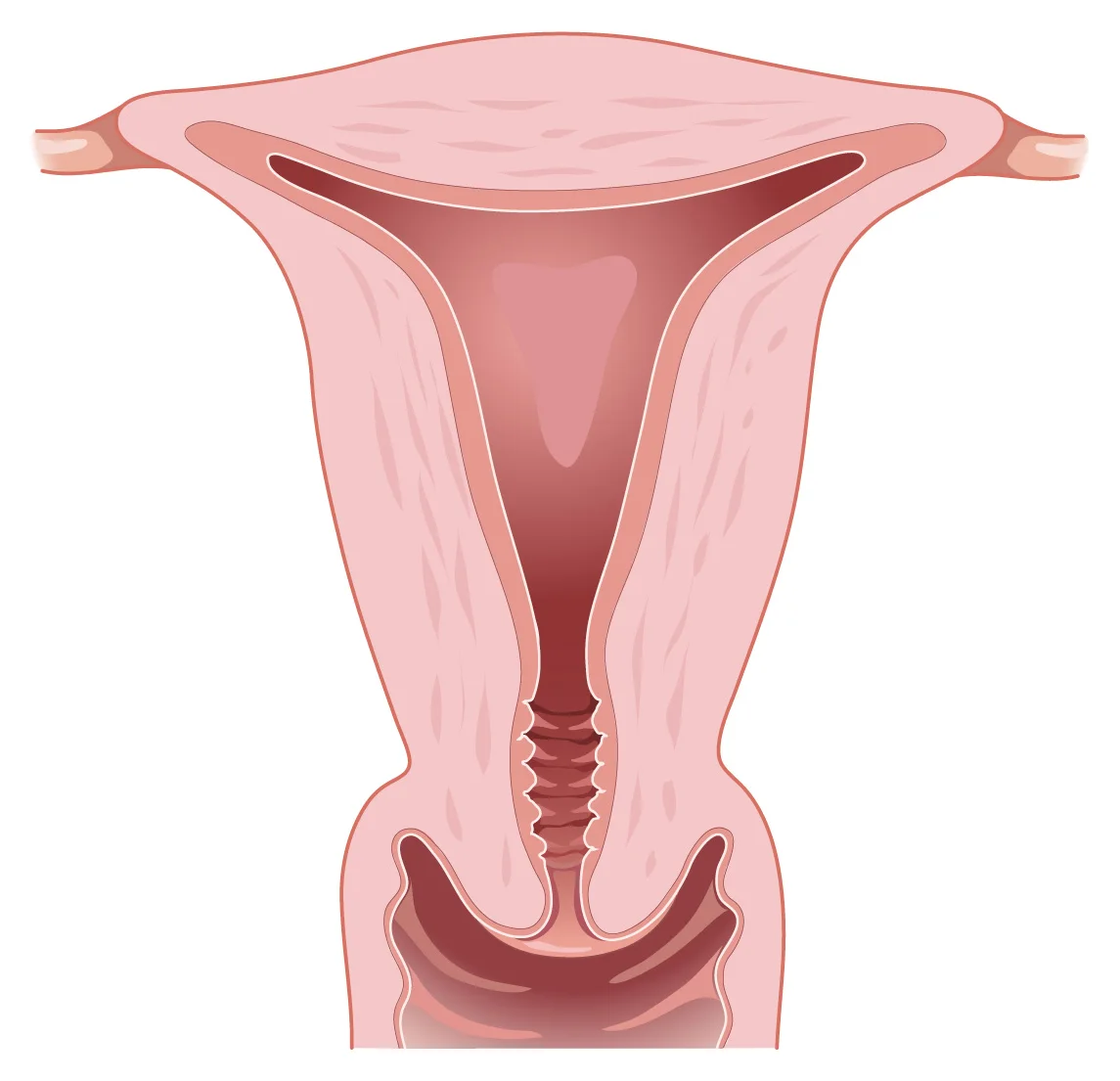
This follicle produces oestrogen, which thickens the endometrium and makes cervical mucus thin and stretchy, helping sperm to pass through. This is the phase whose length varies most from one woman to another and from one cycle to the next.
Ovulation
When oestrogen reaches a high level, the pituitary gland suddenly releases LH (luteinising hormone). Shortly after this LH surge, the follicle bursts and releases the egg. The egg is picked up by the fallopian tube, where fertilisation can take place.
The luteal phase: from ovulation to your period
The empty follicle turns into the corpus luteum, which produces progesterone. This hormone prepares the endometrium to receive an embryo and raises body temperature slightly. This phase varies less than the first one.
Your period
Without fertilisation, the corpus luteum stops working at the end of the luteal phase. The fall in progesterone and oestrogen causes the endometrium to be shed: this is your period, and a new cycle begins.
If an embryo implants, it produces hCG, the hormone detected by pregnancy tests. It keeps the corpus luteum going, so that it continues to produce the progesterone needed in early pregnancy.
Which hormones control the menstrual cycle?
| Hormone | Produced by | Main role |
|---|---|---|
| GnRH | Hypothalamus | Triggers the release of FSH and LH |
| FSH | Pituitary gland | Growth of the follicles |
| LH | Pituitary gland | Triggers ovulation (LH surge) |
| Oestrogen | Follicle, then corpus luteum | Thickening of the endometrium, fertile mucus |
| Progesterone | Corpus luteum | Prepares the endometrium for implantation, raises temperature |
| hCG | Embryo | Keeps the corpus luteum going in early pregnancy |
When do I ovulate and when is my fertile window?
Ovulation does not always happen on day 14. In the study of more than 600,000 cycles, the luteal phase lasted 12.4 days on average and the follicular phase 16.9 days, with wide variation. So ovulation happens later in a long cycle and earlier in a short one.
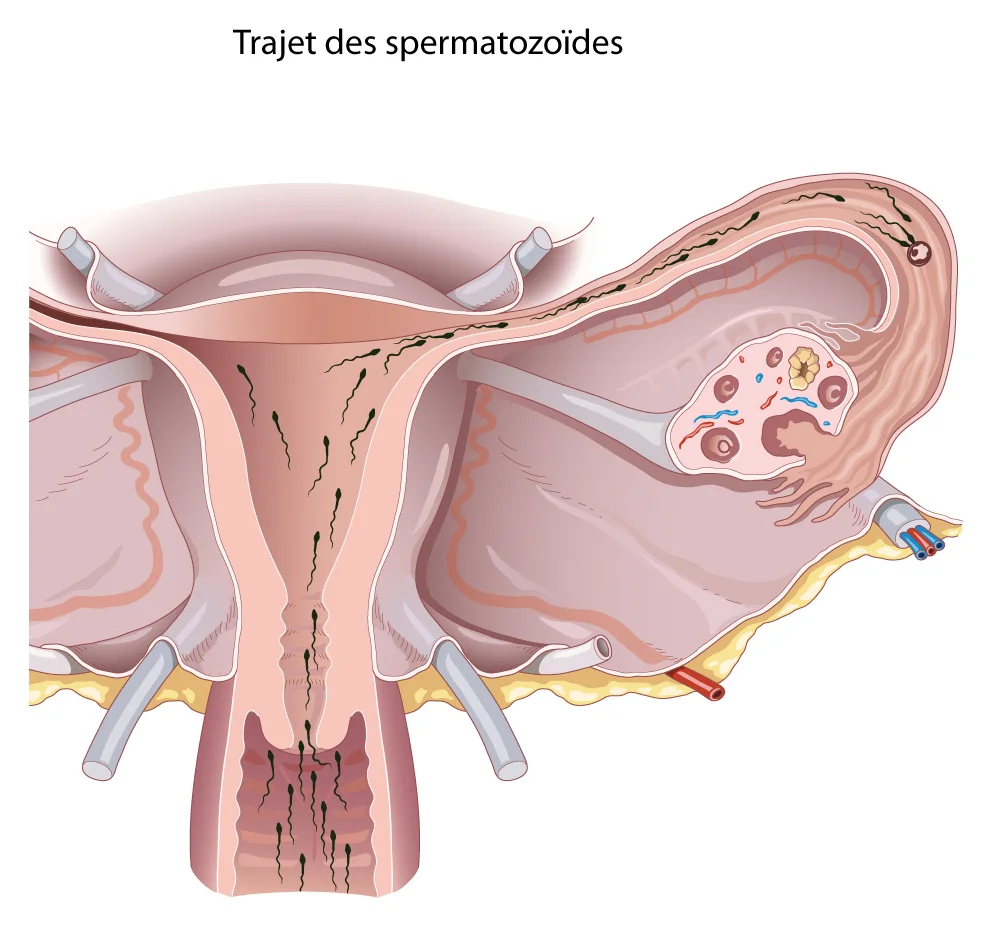
A study published in 1995 (Wilcox et al.) showed that pregnancies result from sex during a six-day window ending on the day of ovulation. Sperm survive for a few days in cervical mucus, whereas the egg can only be fertilised for a short time after it is released.
Several signs can help you identify ovulation:
- cervical mucus, which is clear and stretchy like egg white on fertile days;
- urine LH tests, sold in pharmacies, which detect the surge;
- a temperature chart, which rises after ovulation (it confirms ovulation afterwards);
- ultrasound monitoring of the follicle, as part of fertility tests.
These methods are not reliable contraception. If you want to avoid pregnancy, talk to your doctor.
Which period problems should I see a doctor about?
- Cycles shorter than 24 days or longer than 38 days, or very irregular cycles.
- No periods for several months, once pregnancy has been ruled out.
- Periods lasting more than 8 days or very heavy periods: read our article on heavy periods and bleeding between periods.
- Bleeding between periods or after sex.
- Very painful periods that stop you doing your usual activities.
- Not getting pregnant after a year of regular sex without contraception, or after six months from age 35: see our article on fertility tests for couples.
Common causes of irregular cycles are polycystic ovary syndrome, thyroid problems, too much prolactin, major weight loss or intense sport, and the perimenopause.
Very heavy bleeding with feeling faint, or severe lower abdominal pain, especially if you could be pregnant, means you should call 15 (SAMU) or 112 in France, or your local emergency number.
How does the menstrual cycle change with age?
After the first period, cycles are often irregular for a few years while ovulation becomes established: see our article on puberty in girls. In adulthood, cycles become regular, then get slightly shorter with age. In the perimenopause, cycles become irregular again, before periods stop for good at the menopause.
The hormone changes of the cycle also have effects outside the reproductive organs: tender breasts, bloating, irritability or headaches in the days before a period. These premenstrual symptoms are common. When they are severe and disrupt daily life, it is worth talking to your doctor, because treatments are available.
On the pill or the implant, ovulation is blocked: the bleeding you see is "withdrawal bleeding" or bleeding caused by the treatment, not a true period. With a hormonal coil (levonorgestrel IUD), ovulation often continues, but periods are usually lighter or may stop.
A cycle assessment or pre-conception appointment can be booked at the practice, on Doctolib or by calling 01 43 79 59 79.
Frequently asked questions
Is a 35-day cycle normal?
Yes. According to FIGO criteria, a cycle of 24 to 38 days is normal, as long as it is fairly regular. Ovulation then happens later than day 14.
Can you get pregnant during your period?
It is unlikely but possible, especially with short cycles, because sperm can survive for a few days and ovulation can happen early.
Can you feel ovulation?
Some women feel a slight pain on one side of the lower abdomen when they ovulate, sometimes with light spotting. Not everyone does, and this sign is not a reliable way to date ovulation.
Can stress delay your period?
Yes. Severe stress, weight loss or intense exercise can delay ovulation and therefore your period. A late period should first be checked with a pregnancy test.
How do I work out my ovulation day?
You can estimate it by subtracting about 12 days from your usual cycle length: in a study of more than 600,000 cycles, the phase after ovulation lasted 12.4 days on average. In a regular 30-day cycle, ovulation is therefore around day 17 or 18. This is only an estimate: urine LH tests or checking your cervical mucus can help pinpoint it, but they are not a method of contraception.
References
- Munro MG, et al. The two FIGO systems for normal and abnormal uterine bleeding symptoms and classification of causes of abnormal uterine bleeding in the reproductive years: 2018 revisions.. Int J Gynaecol Obstet, 2018. doi:10.1002/ijgo.12666 — PMID 30198563
- Bull JR, et al. Real-world menstrual cycle characteristics of more than 600,000 menstrual cycles.. NPJ Digit Med, 2019. doi:10.1038/s41746-019-0152-7 — PMID 31482137
- Wilcox AJ, et al. Timing of sexual intercourse in relation to ovulation. Effects on the probability of conception, survival of the pregnancy, and sex of the baby.. N Engl J Med, 1995. doi:10.1056/NEJM199512073332301 — PMID 7477165

Dr Olivier KadochObstetrician-gynaecologist and gynaecological surgeon in Paris (16th and 5th arrondissements). Former chef de clinique-assistant (senior registrar) at the Paris public hospitals (AP-HP); individually accredited by the French National Authority for Health (HAS). RPPS 10003957809. Background and practice locations
A question about your situation?Appointments at the practice or by video consultation, usually within one week to 10 days.
Book an appointmentGeneral information article: it does not replace a medical consultation. In an emergency, call 15 or 112 in France, or your local emergency number.