Breastfeeding: benefits, common problems and how they are treated
In brief
Breastfeeding protects babies against many infections and lowers the mother's risk of breast cancer. The French College of Gynaecologists and Obstetricians (CNGOF) recommends exclusive breastfeeding for at least 4 to 6 months for women who wish to breastfeed. The most common problems (cracked nipples, engorgement, mastitis) can usually be treated without stopping breastfeeding, and a decision not to breastfeed should be respected.
What are the benefits of breastfeeding?
Breast milk adapts to your baby's needs from week to week and feed to feed. It provides antibodies and other protective factors that formula does not contain. This topic is part of the birth preparation covered on the Giving birth in Paris page.
The CNGOF postpartum guidelines (2015) and a major review published in The Lancet in 2016 describe the following benefits:
| For whom | Proven benefits |
|---|---|
| Your baby | Fewer gut and chest infections and ear infections; lower risk of being overweight in childhood; slightly higher intelligence scores. |
| You | Lower risk of breast cancer; longer intervals between births; possible protection against ovarian cancer and type 2 diabetes. |
The CNGOF recommends exclusive, prolonged breastfeeding for at least 4 to 6 months for women who want to breastfeed. Any breastfeeding, even short or partial, is still worthwhile.
How do I get breastfeeding off to a good start in hospital?
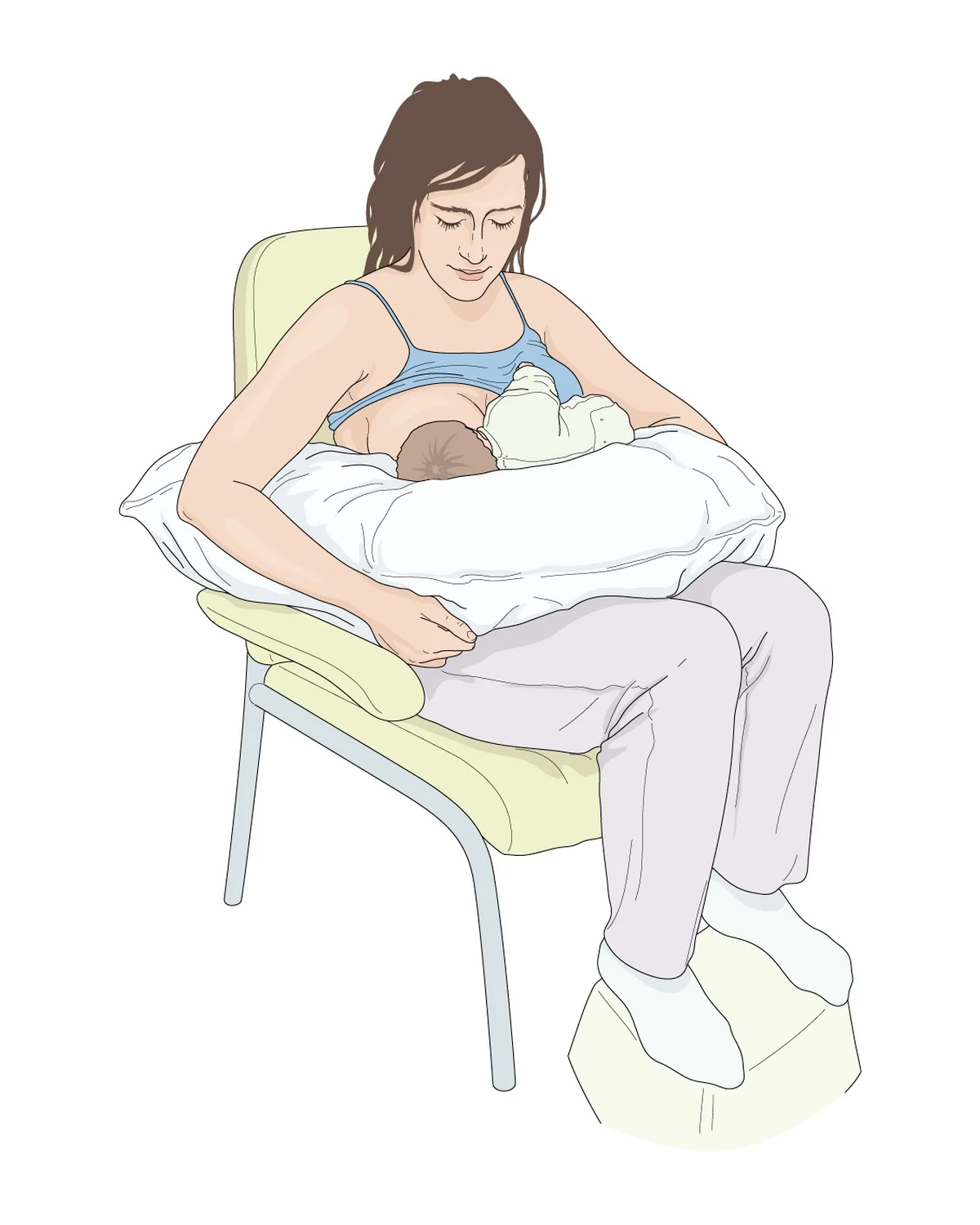
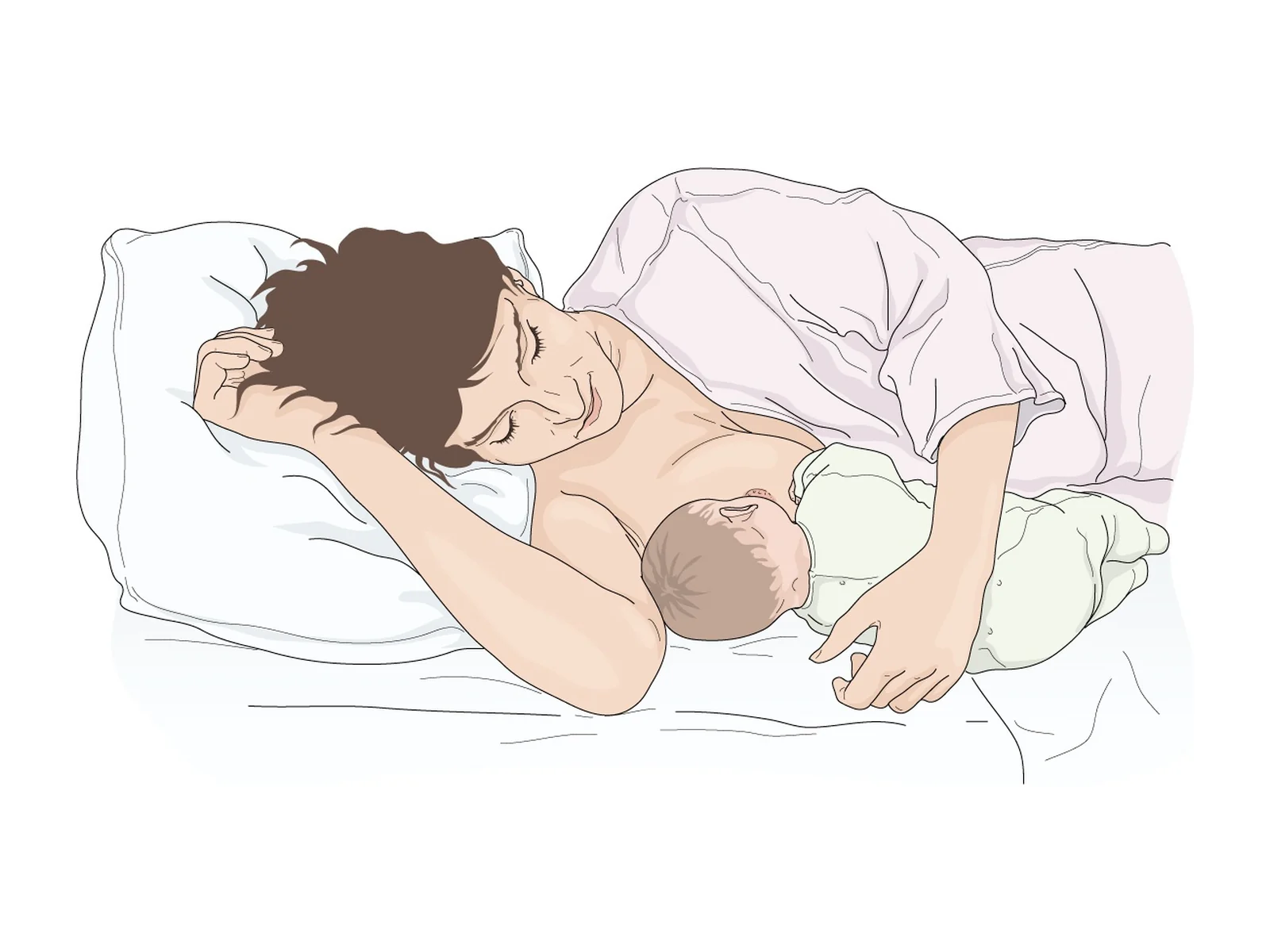
Unless there is a medical reason not to, the first feed is offered within an hour of birth, during skin-to-skin contact. After that, you feed on demand, whenever your baby shows signs of being awake and hungry: turning the head, opening the mouth, bringing the hands to the mouth. There is no need to wait until your baby cries.
In the first days, the breast produces colostrum, a thick, yellow, very rich milk, in small amounts. Your milk usually comes in between day 2 and day 4. Your breasts then feel heavier and firmer. A slight rise in temperature can occur, but a true fever should prompt a search for another cause.
Key points for a good latch
- your baby faces you, tummy to tummy, with the head in line with the body;
- the mouth is wide open and takes in a large part of the areola, not just the nipple;
- the chin touches the breast and the lips are turned outwards;
- you are sitting or lying comfortably, with your back and arms supported.
The maternity unit's midwives and nursery nurses will help you with the first feeds. If needed, they can refer you to a suitable breastfeeding professional.
What breastfeeding problems can mothers have?
Most breastfeeding problems come from the baby's position or from the breast not draining well. They can often be put right within a few days.
Cracked nipples
These are painful splits in the nipple, almost always caused by a poor latch. The priority is to correct your baby's position.
Engorgement
The breasts are hard, tight and painful, often when the milk comes in. Frequent, effective feeds are the main treatment. You can also express a little milk to soften the areola before a feed, and apply something cold between feeds for relief.
Mastitis
An area of the breast becomes red, hot and painful, often with fever and aching. The Academy of Breastfeeding Medicine guidelines (2022) describe these conditions as a spectrum ranging from simple inflammation to infection. Mastitis is first treated by continuing to breastfeed or remove milk (feeds, or a breast pump if needed), without trying to "empty" the breast excessively, with paracetamol and possibly ibuprofen, which is compatible with breastfeeding, and with cold compresses. An antibiotic is prescribed if there is no improvement after 24 to 48 hours, or straight away if symptoms have lasted more than 48 hours, if you feel very unwell or if a cracked nipple is infected. Do not stop breastfeeding abruptly: this increases the risk of an abscess.
Breast abscess
This is a collection of pus in the breast, a rare complication of mastitis. It shows up as a painful lump that does not go away. The diagnosis is confirmed by ultrasound, and treatment involves needle aspiration or drainage together with antibiotics. You can often keep breastfeeding on the other side.
For a detailed overview of these types of pain, see the article on breast pain while breastfeeding.
What precautions should I take for my breastfed baby?
- Vitamins: breastfed babies are given vitamin K and vitamin D supplements, in line with current paediatric guidelines. Your paediatrician or the maternity unit will explain the schedule.
- Jaundice: it is common in the first days and more often prolonged in breastfed babies. It is monitored in the maternity unit and only very rarely means breastfeeding has to stop.
- Medicines: most are compatible with breastfeeding, but not all. Before taking anything, including over-the-counter or herbal products, ask your doctor or pharmacist.
- Alcohol and smoking: alcohol passes into breast milk and should be avoided. Smoking is not advised; if you do smoke, breastfeeding is still better than formula, and support to quit can be offered.
A few rare situations rule out breastfeeding, such as certain infections in the mother or certain treatments. These are discussed during pregnancy.
What if I don't want to breastfeed?
This is your choice and it should be respected. Tell the team as soon as you arrive in the delivery room, so that your baby is given formula from the first feed.
The CNGOF states that medicines to stop milk production should not be prescribed routinely. Bromocriptine should not be used because of serious side effects. If, once informed, you still want treatment, cabergoline or lisuride can be used. Without medication, milk production settles within a few days: a well-fitting bra, cold compresses, painkillers, and avoiding stimulating the breasts.
When should I seek help quickly while breastfeeding?
Contact your midwife, your doctor or the maternity unit within 24 hours if:
- you have a temperature of 38.5 °C or higher, chills or aching;
- an area of the breast is red, hot and painful and does not improve within 24 hours;
- you feel a painful lump that does not go away;
- cracked nipples bleed, become infected or do not heal;
- your baby has few wet nappies, seems drowsy or is not gaining weight well.
If you feel faint, have a high fever and feel very unwell, or if your baby is very drowsy or hard to wake, go to the emergency department or call 15 or 112 in France, or your local emergency number. If you are going through a period of marked sadness, exhaustion or anxiety, talk about it; in France, the national suicide prevention line 3114 answers 24 hours a day for anyone in emotional distress.
Frequently asked questions
Can I breastfeed after a caesarean section?
Yes. You can start breastfeeding in the recovery room if your condition allows, and the painkillers given after a caesarean are compatible with breastfeeding.
Should I stop breastfeeding if I have mastitis?
No. Continuing to breastfeed is part of the treatment, and the milk remains safe for your baby; stopping abruptly actually increases the risk of an abscess. A compatible antibiotic is prescribed if needed.
Does breast size affect milk supply?
No. Milk production depends mainly on how often and how effectively your baby feeds, not on the size of your breasts.
Is breastfeeding a form of contraception?
Only under strict conditions: exclusive breastfeeding day and night, a baby under 6 months old, and no return of periods. Discuss contraception at the maternity unit or at your postnatal check-up.
References
- Sénat MV, et al. Postpartum practice: guidelines for clinical practice from the French College of Gynaecologists and Obstetricians (CNGOF). Eur J Obstet Gynecol Reprod Biol, 2016. doi:10.1016/j.ejogrb.2016.04.032 — PMID 27155443
- Victora CG, et al. Breastfeeding in the 21st century: epidemiology, mechanisms, and lifelong effect. Lancet, 2016. doi:10.1016/S0140-6736(15)01024-7 — PMID 26869575
- Mitchell KB, et al. Academy of Breastfeeding Medicine Clinical Protocol #36: The Mastitis Spectrum, Revised 2022. Breastfeed Med, 2022. doi:10.1089/bfm.2022.29207.kbm — PMID 35576513

Dr Olivier KadochObstetrician-gynaecologist and gynaecological surgeon in Paris (16th and 5th arrondissements). Former chef de clinique-assistant (senior registrar) at the Paris public hospitals (AP-HP); individually accredited by the French National Authority for Health (HAS). RPPS 10003957809. Background and practice locations
A question about your situation?Appointments at the practice or by video consultation, usually within one week to 10 days.
Book an appointmentGeneral information article: it does not replace a medical consultation. In an emergency, call 15 or 112 in France, or your local emergency number.