Breast pain while breastfeeding: causes and what to do
In brief
Breast pain while breastfeeding most often comes from a poor latch, which causes cracked nipples, or from a breast that is not draining well (engorgement, blocked duct, mastitis). Most of these problems settle by correcting the baby's position and carrying on breastfeeding. A fever, a red, hot area that does not improve within 24 hours, or a lump that does not go away should prompt a medical visit.
Is breast pain normal when breastfeeding?
In the first few days, tenderness when the baby latches on is common. It lasts a few seconds and fades during the feed. A Cochrane review showed that, for most women, nipple pain becomes mild after 7 to 10 days, whatever treatment is used. To find out about the full care offered around the birth, see the Childbirth in Paris page.
However, pain that lasts throughout the feed, gets worse, persists between feeds or comes with a fever is not normal. Its cause should be looked for.
How can most breastfeeding pain be prevented?
- offer the breast often, at the first signs your baby is waking, without limiting the length of feeds;
- have the latch checked in the first few days with help from the maternity team;
- avoid skipping feeds or suddenly spacing them out, for example when you go back to work;
- wear a comfortable bra that does not compress the breast.
What causes breast pain during breastfeeding?
| Cause | Typical signs | First steps |
|---|---|---|
| Poor latch | Pain throughout the feed, nipple flattened or misshapen at the end | Correct the position and latch |
| Cracked nipples | Split or sore on the nipple, sometimes bleeding | Correct the latch, simple local care |
| Engorgement | Both breasts hard, tight and hot, often around day 3 | Frequent feeds, soften the areola, cold packs |
| Blocked milk duct | Small tender, firm area, no fever | Keep feeding, cold packs, anti-inflammatory if suitable |
| Mastitis | Red, hot, painful area, fever, aches | Rest, painkillers, keep breastfeeding, see a doctor if no improvement |
| Abscess | Painful lump that does not go away, sometimes soft and fluid-filled | Prompt appointment, ultrasound, drainage |
| Nipple vasospasm | Nipple turns white after the feed, throbbing pain, worse in the cold | Local warmth, medical advice |
Nipple thrush is often suspected, but this diagnosis is now considered to be made too often. It should be confirmed by a professional before any treatment.
How can I heal cracked nipples?
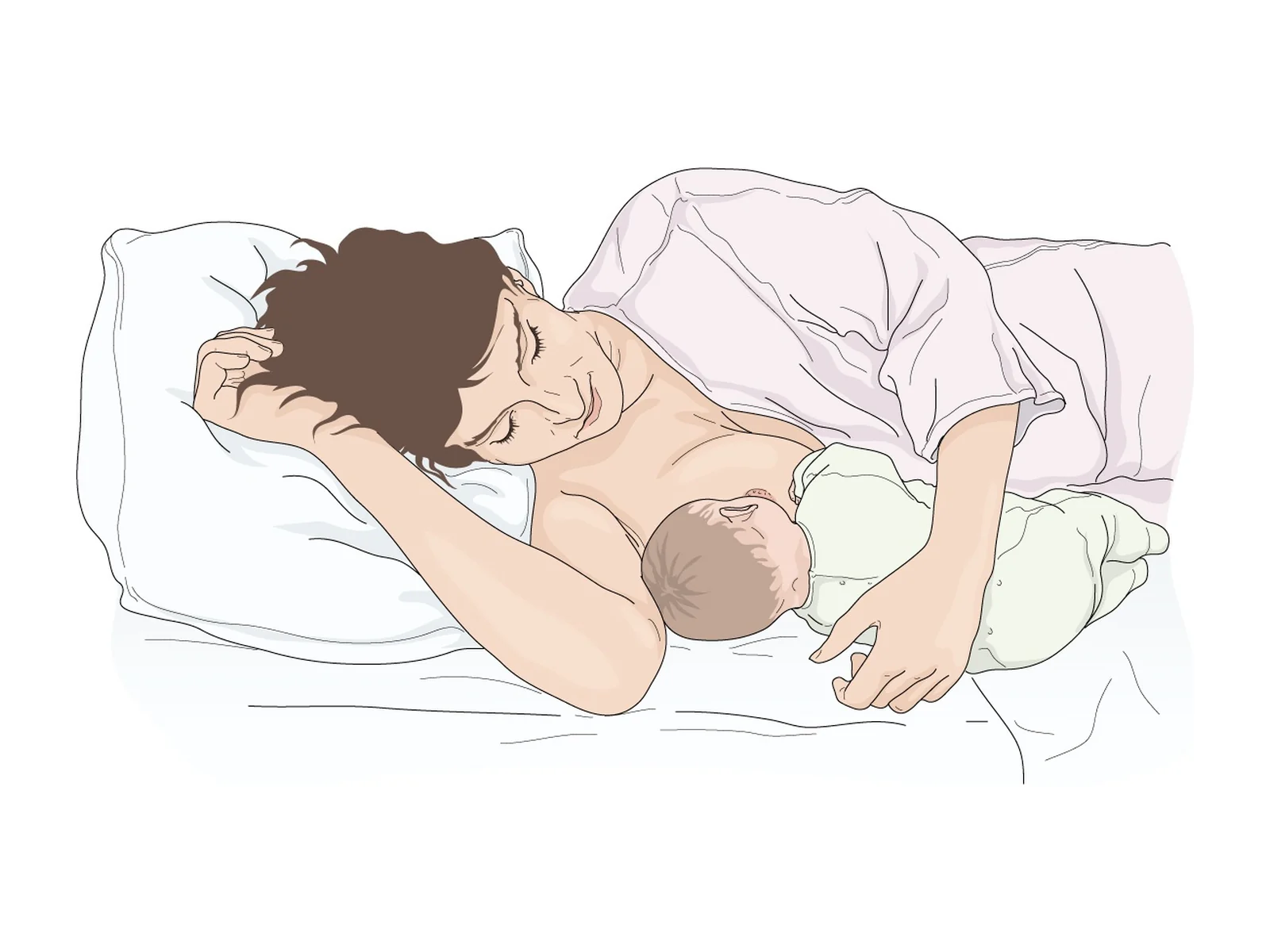
Cracked nipples are most often caused by a shallow latch. The main treatment is therefore to correct the position:
- get comfortable, with your back and arms supported;
- hold the baby facing you, tummy to tummy, with the head in line with the body;
- wait until the baby opens wide before bringing them to the breast;
- the baby should take in a large part of the areola, chin against the breast, lips turned out;
- to take the baby off, slide a finger into the corner of their mouth to break the suction.
Start the feed on the less painful side. After the feed, let the nipple air-dry. The Cochrane review did not show that a cream, lanolin or a dressing is clearly more effective than simple support; they may add comfort but do not replace correcting the latch. Paracetamol is compatible with breastfeeding, at the doses advised by your doctor or pharmacist.
If the cracks persist despite a good position, have your baby's mouth checked: a short tongue-tie can affect sucking.
Engorgement, blocked duct or mastitis: how do I tell them apart and treat them?
The Academy of Breastfeeding Medicine guidelines (2022) describe these conditions as a spectrum, from engorgement to mastitis and, rarely, to an abscess. They have changed several long-standing pieces of advice.
Engorgement
It affects both breasts, often when the milk comes in. Frequent, effective feeds are the main treatment. If the areola is too tight for the baby to latch, hand-express a little milk to soften it. Cold packs between feeds reduce swelling.
Blocked duct and mastitis
One area becomes tender and firm. With mastitis, it is red and hot, with fever or aches. Current advice is:
- keep breastfeeding as normal, on demand; the milk remains safe for the baby;
- avoid pumping extra milk to “empty” the breast, which keeps oversupply going;
- apply cold rather than heat, and avoid deep massage, which worsens inflammation; light stroking towards the armpit may help;
- rest and take a painkiller compatible with breastfeeding, on medical advice.
An antibiotic compatible with breastfeeding is prescribed if symptoms do not improve after 24 to 48 hours, or straight away if symptoms have lasted more than 48 hours, you feel very unwell or a cracked nipple is infected. Do not stop breastfeeding abruptly: this increases the risk of an abscess.
What do I need to know about a breast abscess?
An abscess is a pocket of pus in the breast. It is a rare complication of mastitis. It shows up as a painful lump that persists despite treatment, sometimes with tight, shiny skin and fever.
An ultrasound scan confirms the diagnosis. Treatment usually involves needle aspiration guided by ultrasound, repeated if needed, together with an antibiotic. Surgical drainage is kept for large or recurring abscesses.
Breastfeeding can usually continue, at least on the other breast, and often on the affected breast too if the wound is away from the nipple. If feeding on that side is not possible, expressing milk helps maintain your supply. Your doctor will advise you according to your situation.
When should I see a doctor about breast pain while breastfeeding?
Book a prompt appointment with your doctor, midwife or a lactation consultant if:
- the pain continues despite correcting the position;
- the cracks are deep, bleed or do not heal;
- a red, hot, painful area does not improve within 24 hours;
- you have a fever, chills or aches;
- you feel a lump that does not go away;
- you are thinking of stopping breastfeeding because of the pain.
Seek emergency care (maternity or gynaecology emergency department) if you have a high fever and feel very unwell, or if the redness spreads quickly. If you feel faint, in France call 15 (or your local emergency number). Otherwise, you can contact the practice on 01 43 79 59 79 or book an appointment on Doctolib.
A breast lump that persists after breastfeeding should also be examined: see breast lump: what to do.
Frequently asked questions
Which painkiller can I take while breastfeeding?
Paracetamol and ibuprofen are compatible with breastfeeding, unless you have a personal contraindication. Ask your doctor or pharmacist before taking either.
Can my baby drink milk from a breast with mastitis?
Yes. The milk remains safe for the baby, and continuing to feed is part of the treatment. The milk may taste slightly saltier, which some babies dislike.
Do silicone nipple shields help with cracked nipples?
They can help temporarily, but they do not correct the cause and may reduce milk transfer. Discuss their use with a breastfeeding professional.
Should I use heat or cold on a painful breast?
For engorgement or mastitis, cold packs between feeds are advised to reduce inflammation. Warmth just before a feed can help the milk flow, and it is recommended for nipple vasospasm.
References
- Mitchell KB, et al. Academy of Breastfeeding Medicine Clinical Protocol #36: The Mastitis Spectrum, Revised 2022. Breastfeed Med, 2022. doi:10.1089/bfm.2022.29207.kbm — PMID 35576513
- Dennis CL, et al. Interventions for treating painful nipples among breastfeeding women. Cochrane Database Syst Rev, 2014. doi:10.1002/14651858.CD007366.pub2 — PMID 25506813
- Sénat MV, et al. Postpartum practice: guidelines for clinical practice from the French College of Gynaecologists and Obstetricians (CNGOF). Eur J Obstet Gynecol Reprod Biol, 2016. doi:10.1016/j.ejogrb.2016.04.032 — PMID 27155443

Dr Olivier KadochObstetrician-gynaecologist and gynaecological surgeon in Paris (16th and 5th arrondissements). Former chef de clinique-assistant (senior registrar) at the Paris public hospitals (AP-HP); individually accredited by the French National Authority for Health (HAS). RPPS 10003957809. Background and practice locations
A question about your situation?Appointments at the practice or by video consultation, usually within one week to 10 days.
Book an appointmentGeneral information article: it does not replace a medical consultation. In an emergency, call 15 or 112 in France, or your local emergency number.