Follow-up after breast cancer: tests, precautions and lifestyle advice
In brief
Follow-up after breast cancer (surveillance after treatment) relies on a clinical examination every 3 to 6 months for 5 years, then once a year for life, and a yearly mammogram. In a woman with no symptoms, repeated scans and blood tumour markers are not useful. Follow-up also helps manage the effects of hormone therapy, prevent lymphoedema and support you with contraception, pregnancy and a return to normal life.
Why is follow-up needed after breast cancer?
The end of active treatment (surgery, chemotherapy, radiotherapy) opens a new stage. Follow-up has several aims:
- to detect early any recurrence in the treated breast or on the scar;
- to screen for a new cancer in the other breast;
- to monitor and treat the side effects of treatment, particularly hormone therapy;
- to support your return to personal, working and intimate life.
It is organised between the oncology team, your gynaecologist and your GP. This article complements our gynaecological cancer care page and our general article on breast cancer.
How often are check-ups and mammograms needed after breast cancer?
| Period | Appointment (clinical examination) | Imaging |
|---|---|---|
| Years 1 to 5 | Every 3 to 6 months | Yearly mammogram (± ultrasound), the first one a year after the initial mammogram and at least 6 months after the end of radiotherapy |
| After 5 years | Once a year, for life | Yearly mammogram |
This schedule is a baseline, adapted to each situation. A breast MRI may be offered for women with a genetic predisposition or breasts that are hard to assess on imaging.
Why not more tests?
A Cochrane review compared intensive follow-up (regular scans, bone scans, blood tests) with clinical follow-up plus mammography: intensive follow-up does not prolong survival or improve quality of life. French guidelines (INCa) therefore include no routine imaging or blood tests when there are no warning signs. However, any new symptom should lead to targeted tests.
Which symptoms should I report between appointments?
Keep looking at and feeling your breasts, scar and armpits, including after mastectomy or reconstruction. Do not wait for your next appointment if you notice:
- a lump, thickening or redness on the treated breast, the scar or the other breast;
- a lymph node in the armpit or above the collarbone;
- persistent bone pain that does not settle within a few weeks and wakes you at night;
- a persistent cough or unusual breathlessness;
- severe, lasting fatigue, or unexplained weight loss;
- vaginal bleeding after menopause, especially on tamoxifen.
If you have sudden breathlessness, chest pain or a swollen, painful leg, in France call 15 (or your local emergency number): these signs may point to deep vein thrombosis or pulmonary embolism, the risk of which is increased by some treatments.
What side effects of hormone therapy should be monitored?
When the tumour had hormone receptors, hormone therapy is prescribed for at least 5 years, sometimes 7 to 10 years. It is important not to stop it without talking to your oncologist: it clearly reduces the risk of relapse.
Tamoxifen
It increases the risk of endometrial polyps and cancer in postmenopausal women, as well as the risk of deep vein thrombosis. Any vaginal bleeding after menopause should be checked promptly: a pelvic ultrasound and, if needed, a hysteroscopy with biopsy are carried out. See our article on bleeding after menopause. Without symptoms, a clinical check at least once a year is recommended, with no routine ultrasound.
Aromatase inhibitors (anastrozole, letrozole, exemestane)
They cause bone loss. A bone density scan is done at the start of treatment and then regularly; enough calcium and vitamin D, physical activity and sometimes a bone-protecting treatment are offered. Joint pain is common and can be relieved.
Common effects
Hot flushes, vaginal dryness, pain during sex: non-hormonal solutions exist. Menopausal hormone therapy, however, is contraindicated. See our articles on hot flushes without hormones and vaginal dryness.
How can I prevent arm lymphoedema after breast cancer?
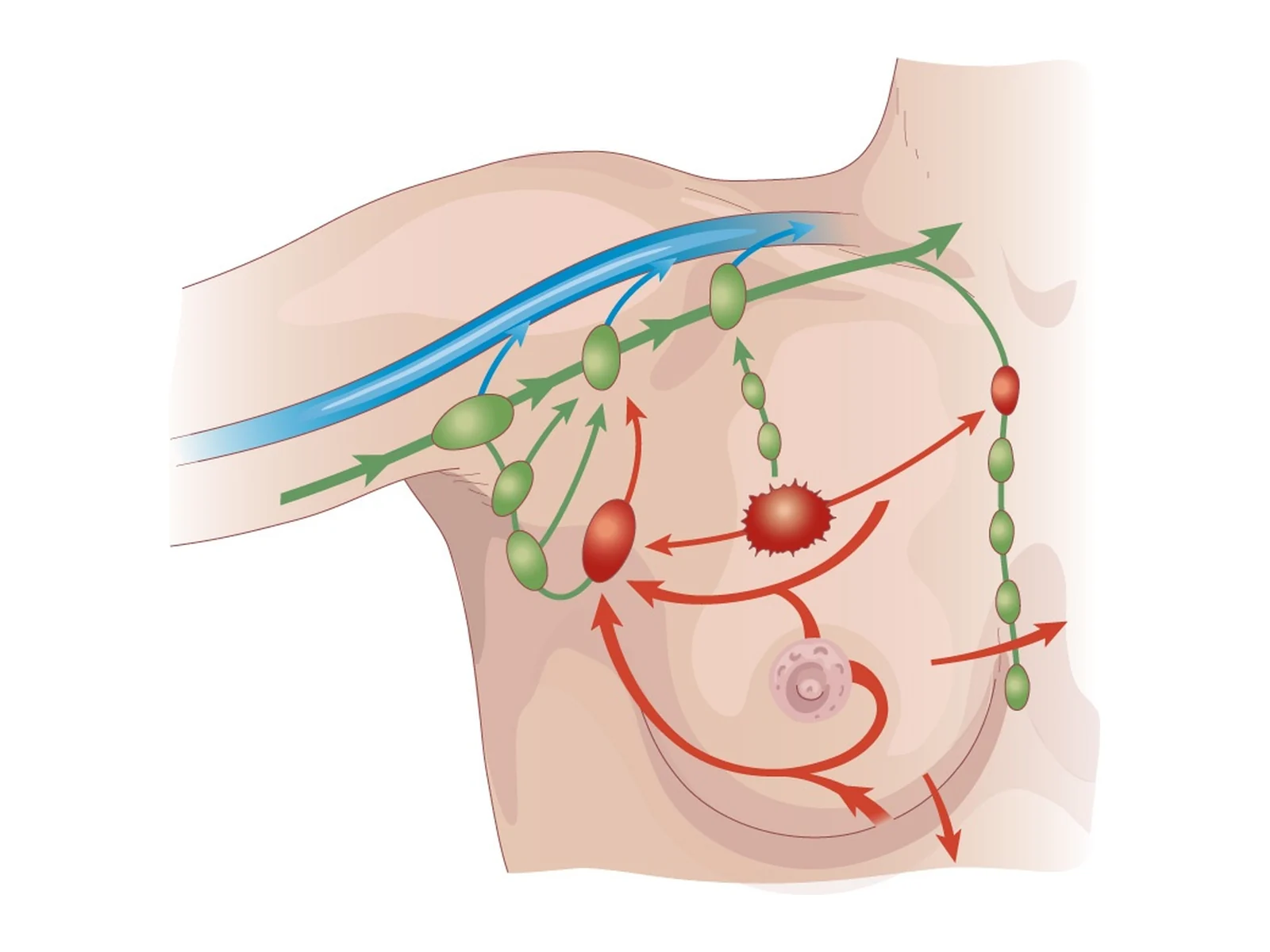
Lymphoedema is swelling of the arm on the side of the operation, caused by the removal of lymph nodes from the armpit. It is much rarer after the sentinel node technique alone than after axillary clearance, and it can appear months or years after surgery.
- Keep your weight stable and stay physically active: gradual strength training is safe and does not encourage lymphoedema.
- Protect the skin of your arm: wear gloves for gardening and housework, carefully disinfect any wound, and see a doctor promptly if the skin becomes red and warm (risk of an infection called lymphangitis).
- As a precaution, many teams advise avoiding blood tests and blood pressure readings on that arm when possible. These precautions should never delay necessary care.
At the slightest swelling, see a doctor: early treatment by a trained physiotherapist (drainage, bandaging, compression sleeve) is more effective.
Can I use contraception and get pregnant after breast cancer?
Contraception
Hormonal contraception, both combined and progestogen-only (pill, implant, ring, hormonal IUD), is contraindicated after breast cancer. The recommended methods are the copper IUD, condoms or, if you do not want more children, tubal sterilisation. Contraception is still needed even if your periods stopped during chemotherapy, because ovulation can return, particularly on tamoxifen, which is harmful to an embryo.
Pregnancy
According to current data, pregnancy after breast cancer does not increase the risk of recurrence. It is usually advised to wait at least 2 years after diagnosis, a period that varies with the risk of relapse and ongoing treatment. For women on hormone therapy, the international POSITIVE trial showed that temporarily pausing treatment after 18 to 30 months of hormone therapy, to try for a pregnancy, did not increase the short-term risk of relapse (3 years of follow-up); hormone therapy is then resumed. This plan is prepared with the oncologist and the obstetrician-gynaecologist, who will then follow the pregnancy together.
How can I live well after breast cancer?
- Physical activity: moderate-intensity activity several times a week, combined with strength training. It reduces fatigue, improves quality of life and helps keep your weight stable. In France, it can be prescribed by your doctor (adapted physical activity).
- Diet and alcohol: a varied diet, limited alcohol, stopping smoking.
- Heart: some treatments (anthracyclines, trastuzumab, radiotherapy to the left breast) call for heart monitoring and checks of blood pressure, cholesterol and diabetes.
- Intimate life: reduced desire, dryness and a changed body image are common. They are worth raising at your appointment: solutions exist.
- Psychological support: fear of recurrence is normal. Psychologists, patient associations and supportive care services are there to help you.
- Work and loans: in France, a gradual, part-time return to work (temps partiel thérapeutique) makes going back easier. Since the French law of 28 February 2022, the "right to be forgotten" (droit à l'oubli) means you no longer have to declare your cancer to a mortgage insurer 5 years after the end of treatment, provided there has been no relapse.
Gynaecological follow-up can be provided at the practice, in coordination with the oncology team treating you.
Frequently asked questions
Do I need a scan every year after breast cancer?
No, not if you have no symptoms. Follow-up relies on a clinical examination and a yearly mammogram; CT and bone scans are only ordered if there is a warning sign.
Should the CA 15-3 tumour marker be tested regularly?
Guidelines do not advise routine testing during follow-up, because it does not improve survival and can cause needless worry.
Can I take menopausal hormone therapy after breast cancer?
No, it is contraindicated. Non-hormonal treatments exist for hot flushes and vaginal dryness.
How long does follow-up last after breast cancer?
For life, but it becomes lighter over time: it becomes yearly after 5 years, with a mammogram every year.
References
- Institut national du cancer (INCa). Cancers du sein : du diagnostic au suivi [Breast cancer: from diagnosis to follow-up]. Tools for general practitioners, 2016. cancer.fr
- Loibl S, et al. Early breast cancer: ESMO Clinical Practice Guideline for diagnosis, treatment and follow-up. Ann Oncol, 2024. doi:10.1016/j.annonc.2023.11.016 — PMID 38101773
- Moschetti I, et al. Follow-up strategies for women treated for early breast cancer. Cochrane Database Syst Rev, 2016. doi:10.1002/14651858.CD001768.pub3 — PMID 27230946

Dr Olivier KadochObstetrician-gynaecologist and gynaecological surgeon in Paris (16th and 5th arrondissements). Former chef de clinique-assistant (senior registrar) at the Paris public hospitals (AP-HP); individually accredited by the French National Authority for Health (HAS). RPPS 10003957809. Background and practice locations
A question about your situation?Appointments at the practice or by video consultation, usually within one week to 10 days.
Book an appointmentGeneral information article: it does not replace a medical consultation. In an emergency, call 15 or 112 in France, or your local emergency number.